Your Airport Survival Guide During the TSA Crisis (2026)
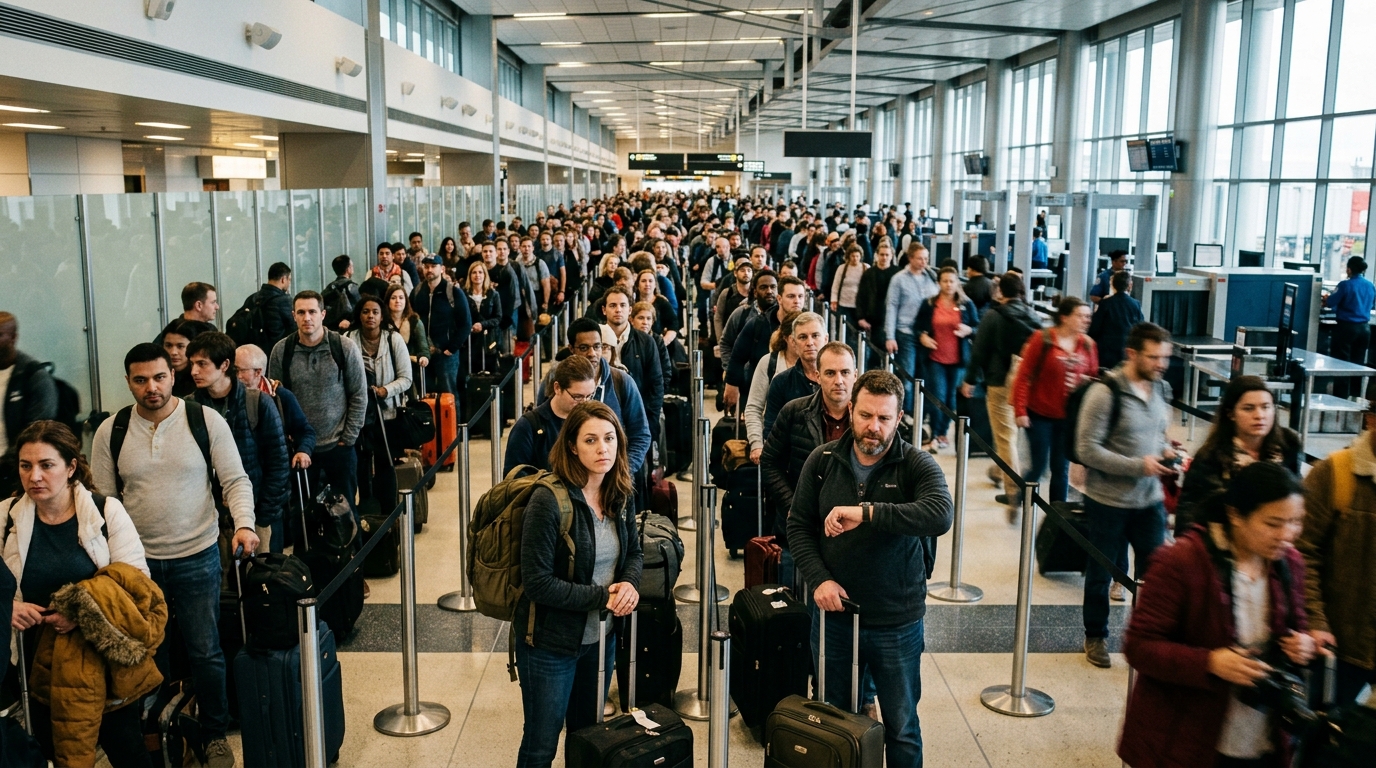
You're standing in a security line that snakes past the food court, through the terminal doors, and into the parking garage. Your flight boards in 90 minutes. The family behind you has been here since 5am. Welcome to flying in America, March 2026.
The ongoing DHS (Department of Homeland Security) funding standoff has left roughly 50,000 TSA officers working without pay, and the cracks are showing at every major airport in the country.
Lines that used to take 15 minutes now take two hours.
Checkpoints are closing. And this TSA crisis is unfolding right as 171 million passengers head to airports for spring break. We've been tracking the situation daily — here's what's actually happening, which airports are hit hardest, and the specific tools and tactics that will get you through security without missing your flight.
Arrive 3-4 hours early at major hubs (5 hours at the worst-hit airports). Get TSA PreCheck + Touchless ID for 10-second screening. Use Spot Saver to reserve a free security time slot at JFK, SEA, MSP, PHX, or MCO. Check live wait times on the MyTSA app or your airport's website before leaving home. Bring your passport as backup ID — the REAL ID fee is $45 if your license doesn't comply.
What's Actually Happening (and How Bad Is It?)
The Department of Homeland Security's funding lapsed on February 13, 2026, after Congress failed to reach a deal on immigration enforcement reforms. That single political failure set off a chain reaction that's now grinding U.S. airports to a halt. As of March 19, 2026, roughly 50,000 TSA screeners are required to keep working — but they haven't received a full paycheck in over a month.
Unpaid workers stop showing up. According to CNBC, the average callout rate has tripled from 2% to 6% nationwide, and at some airports it's far worse. Houston Hobby hit a 55% callout rate on March 14 — meaning more than half the scheduled screeners didn't show up. At Atlanta, JFK, and Houston Bush, callout rates have hovered around 20% since the shutdown began.
Meanwhile, 366 officers have quit outright. The TSA also separately terminated 243 probationary employees as part of broader federal workforce reductions. That's over 600 fewer screeners in a system that was already stretched thin.
And the timing couldn't be worse. Airlines for America projects 171 million passengers will fly between March and April 2026 — a 4% jump over last year. DFW alone expects 4.7 million travelers this spring break. Record demand crashing into a skeleton crew.
The Worst-Hit Airports Right Now
Not all airports are equally affected. Smaller airports with fewer checkpoints are more vulnerable to staffing drops, but the biggest delays are at high-volume hubs where even a modest callout rate creates cascading backlogs. This applies to all U.S. airports with TSA screening — including for international travelers connecting through American hubs.
| Airport | Reported Wait | Key Issue |
|---|---|---|
| Houston Hobby (HOU) | 3+ hours | 55% callout rate on Mar 14 |
| Hartsfield-Jackson Atlanta (ATL) | 2+ hours | ~20% callout rate since Feb 14 |
| Houston Bush (IAH) | 2 hours | ~20% callout rate, international terminal swamped |
| Philadelphia (PHL) | Variable | 3 checkpoints closed (Terminals A-West, C, F) |
| New York LaGuardia (LGA) | 1.5+ hours | Standard lanes backed up significantly |
| New Orleans (MSY) | 2 hours | 30%+ callout rate on peak days |
| Fort Lauderdale (FLL) | 1+ hour | Lines stretching outside terminal doors |
Acting Deputy TSA Administrator Adam Stahl told Fox News that if callout rates keep climbing, the agency "may have to quite literally shut down airports — particularly smaller ones." Philadelphia has already closed three of its security checkpoints, funneling all passengers through the remaining ones at Terminals A-East, B, and D/E.
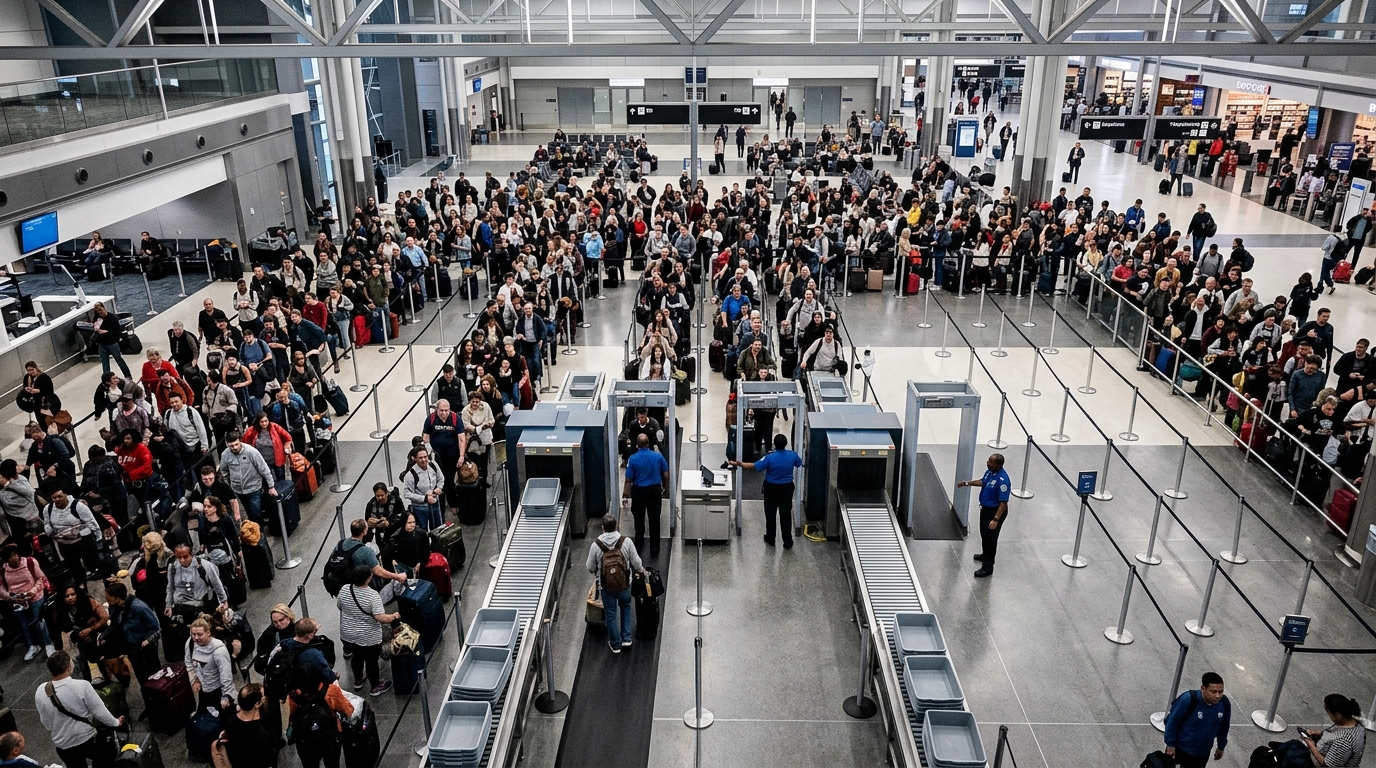
Most lanes closed, all the travelers — the new normal at major hubs.
The New Arrival Rules: How Early Is Early Enough?
Forget the old two-hours-for-domestic, three-for-international advice. Right now, you need a bigger buffer — and the exact timing depends on where you're flying from and when.
Multiple airports have officially updated their guidance. NBC News reports that some major hubs are advising passengers to arrive up to five hours before their flight. That sounds extreme, but at Houston Hobby on March 14, a five-hour buffer was the difference between making your flight and watching it leave.
| Scenario | Recommended Arrival | Why |
|---|---|---|
| Worst-hit hubs (HOU, ATL, IAH) | 4-5 hours early | 3+ hour waits reported regularly |
| Major hubs (JFK, LAX, ORD, DFW) | 3-4 hours early | Unpredictable swings in staffing |
| Mid-size airports with PreCheck | 2.5-3 hours early | Lower volume but fewer backup lanes |
| Small regional airports | 2-3 hours early | Risk of checkpoint closure entirely |
The pattern is clear: the bigger the airport, the bigger the buffer you need. But even small regional airports carry risk right now — if the only checkpoint is understaffed, there's no backup lane to absorb the overflow.
Fly early morning or red-eye. TSA staffing tends to be most stable at the start of the shift (4-6am), and callout rates spike later in the day. A 6am departure means you're clearing security around 4am — when lines are shortest and staff are freshest.
If you're stuck with extra time, most major airports have lounges you can access with programs like Priority Pass or by purchasing a day pass (roughly $30-60 depending on the airport and lounge). Some, like ATL's SkyClub and JFK's Centurion Lounge, offer food, showers, and workspaces. Think of it as buying insurance against boredom, not luxury.
Speed Passes: PreCheck, CLEAR, and Touchless ID Explained
You have four tiers of airport security screening in 2026, and the gap between them has never been wider. Standard lanes at some airports are hitting three hours. PreCheck lanes at the same airports? As little as four minutes. Here's exactly what each option gets you and what it costs.
| Program | Cost | What It Does | Best For |
|---|---|---|---|
| Standard screening | Free | Full screening: laptops out, shoes off, liquids separate | Infrequent travelers |
| TSA PreCheck | $77-85/5 years | Dedicated lane, keep shoes/belt on, laptop stays in bag | Anyone flying 2+ times/year |
| CLEAR+ | $209/year | Biometric ID verification, skip to front of screening line | Very frequent flyers (10+/year) |
| PreCheck + Touchless ID | $77-85/5 years | Facial recognition replaces ID check — 10 seconds through identity verification | Everyone with PreCheck at a participating airport |
PreCheck pricing varies by enrollment provider — IDEMIA charges $76.75, CLEAR charges $79.95, and Telos charges $85. Many travel credit cards reimburse the fee entirely.
Touchless ID is the move right now. If you already have TSA PreCheck, Touchless ID is a free add-on that uses facial comparison technology to verify your identity in about 10 seconds — no ID card, no boarding pass, no fumbling through your bag. You look at a camera, it matches your face to your passport photo on file, and you walk through. It's currently live at 15 airports including ATL, DFW, ORD, JFK, LAX, and SEA, with 50 more planned for 2026.
To set it up: update your airline profile (American, Delta, United, Southwest, or Alaska) with your Known Traveler Number and passport details, then opt in through the airline app or during check-in.
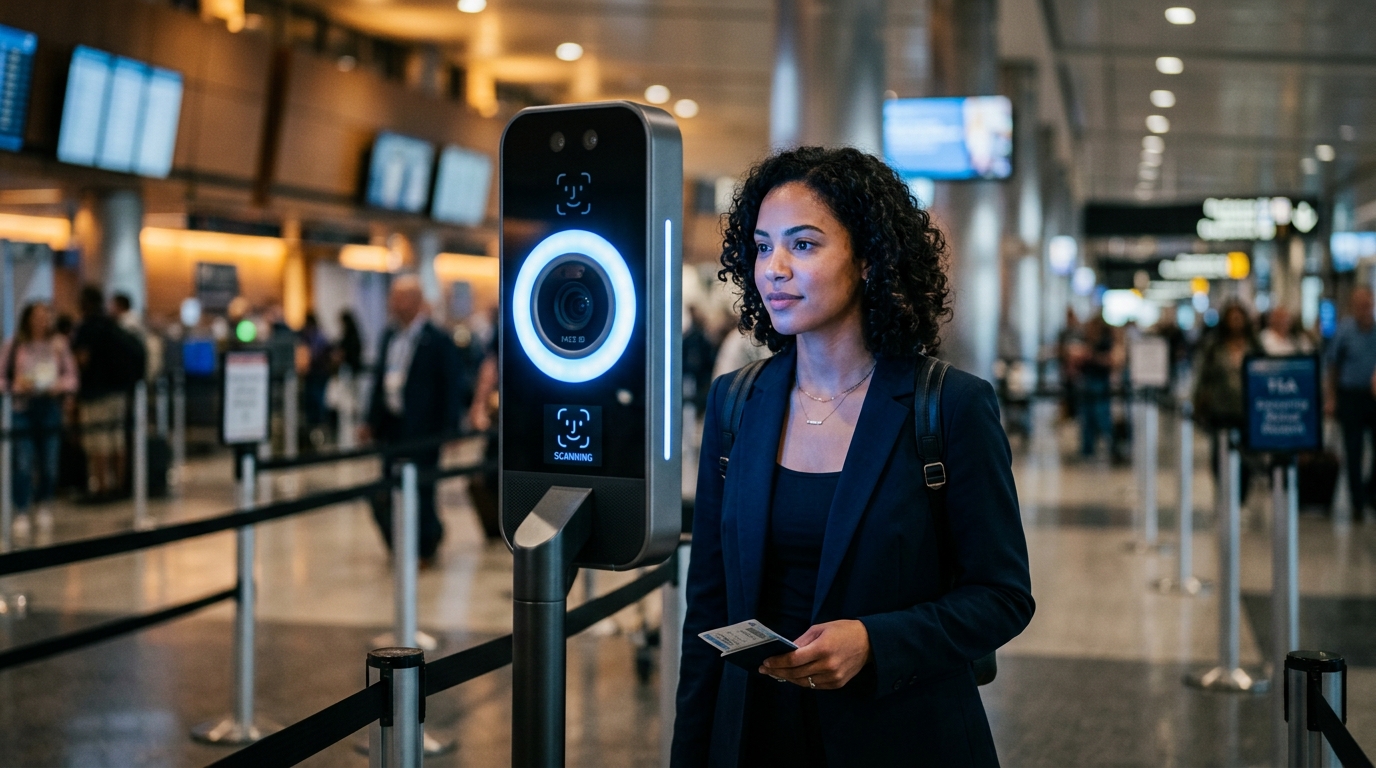
Ten seconds and you're through — Touchless ID is the fastest lane in 2026.
The Free Shortcut Most Travelers Don't Know About
Five airports now offer free security line reservations — no membership, no fee. You book a time slot online, show up at that time, and skip the general queue.
- SEA Spot Saver (Seattle-Tacoma) — book 5 days to 60 minutes before departure
- MSP Reserve (Minneapolis-St. Paul) — free reservation at both terminals
- JFK Terminal 4 — free slot booking for T4 departures
- Phoenix Sky Harbor — reservation system at main checkpoints
- Orlando MCO — slot-based entry during peak hours
These programs were niche conveniences before the crisis. Right now, they're lifelines. If you're flying through any of these five airports, book a slot the moment you have your flight confirmation.
Some airports have closed PreCheck-dedicated checkpoints due to staffing shortages. Philadelphia shut down its Terminal C PreCheck checkpoint in early March. Check your airport's website for which checkpoints are actually open — having PreCheck doesn't help if its lane is closed.
Your REAL ID Situation (Yes, It Matters Now)
You made it through the line in 40 minutes thanks to PreCheck. Then the officer looks at your license and frowns. "This isn't REAL ID compliant." Now you're heading to a separate screening area, $45 lighter, and 30 minutes behind. Don't let this happen to you.
As of May 7, 2025, REAL ID enforcement is live. If your driver's license doesn't have the star marking in the upper corner, it's no longer accepted as valid ID at TSA checkpoints. This was coming for years, but combined with the current crisis, it's adding another layer of friction for unprepared travelers.
Since February 1, 2026, there's a fallback — but it's not free. TSA ConfirmID lets you pay a $45 fee for manual identity verification if you show up without compliant ID. The catch: it can add 30+ minutes to your screening time, and the clearance only lasts 10 days.
Your best options to avoid this entirely:
- Passport or passport card — always accepted, no REAL ID needed
- Military ID — valid for all domestic flights
- REAL ID-compliant license — look for the gold star on your state ID
- Global Entry or NEXUS card — these are accepted federally
If you're not sure about your license, check before you leave for the airport. Don't find out at the checkpoint. And if you're flying with kids, note that children under 18 don't need ID when traveling domestically with an adult. (International travel may have different requirements — check with your airline.) If this is your first time flying internationally, our guide to common first-trip mistakes covers the document pitfalls worth avoiding.
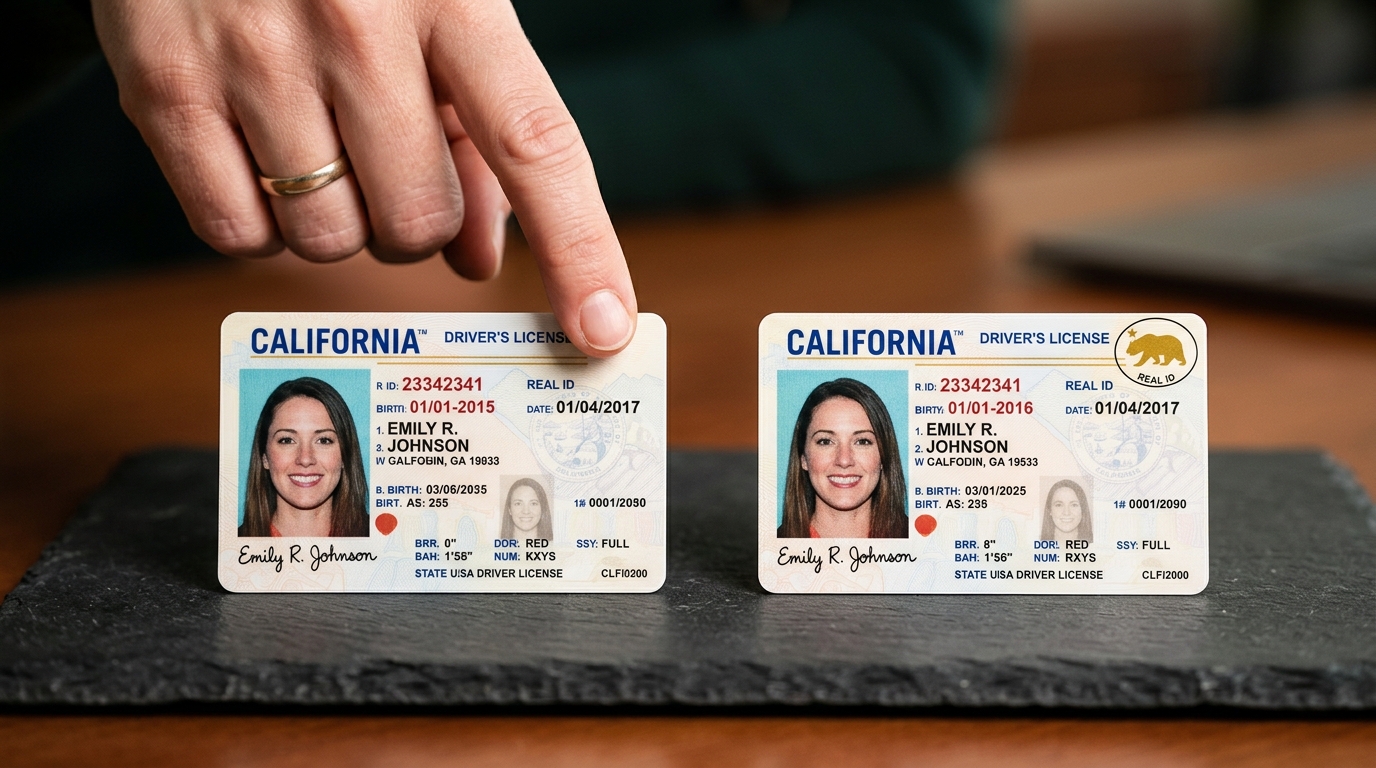
Spot the star — it's the difference between a 10-second scan and a $45 headache.
When Things Go Wrong: Missed Flights and Closed Checkpoints
Here's the uncomfortable truth: if you miss your flight because of a long TSA line, the airline is not obligated to compensate you. TSA is a government agency, not an airline partner. The carrier didn't cause the delay, so refunds are unlikely and rebooking is at their discretion. If your flight gets cancelled outright, here's how to get your money back.
You still have options:
At the airport:
- Same-day standby — Most airlines let you stand by for the next available flight at no charge if you missed yours on the same day. Ask at the gate, not the ticket counter.
- Same-day confirmed change — Carriers like Delta charge a $75 fee to confirm a seat on a later flight (as of March 2026). Gold Medallion members and above get this waived. Other airlines have similar policies with fees varying by carrier.
- Call while you wait — Phone the airline's rebooking line while you're still in the security queue. Hold times are often shorter than the line at the service desk, and agents can pre-book you on a later flight before you even reach the gate.
Before you fly:
- Travel insurance — Policies with "trip delay" coverage typically reimburse meals and accommodation after a qualifying delay period. The Chase Sapphire Reserve, for example, covers up to $500 per ticket for delays over 6 hours. Even basic travel insurance policies (starting around $30-50 per trip) often include some delay coverage — check your policy wording for the specific trigger threshold.
- Credit card protections — Premium cards like the Chase Sapphire Reserve and the Amex Platinum include trip delay benefits when you book flights on the card, covering food, hotels, and necessities during documented delays. But you don't need a premium card — many mid-tier travel cards also include this benefit.
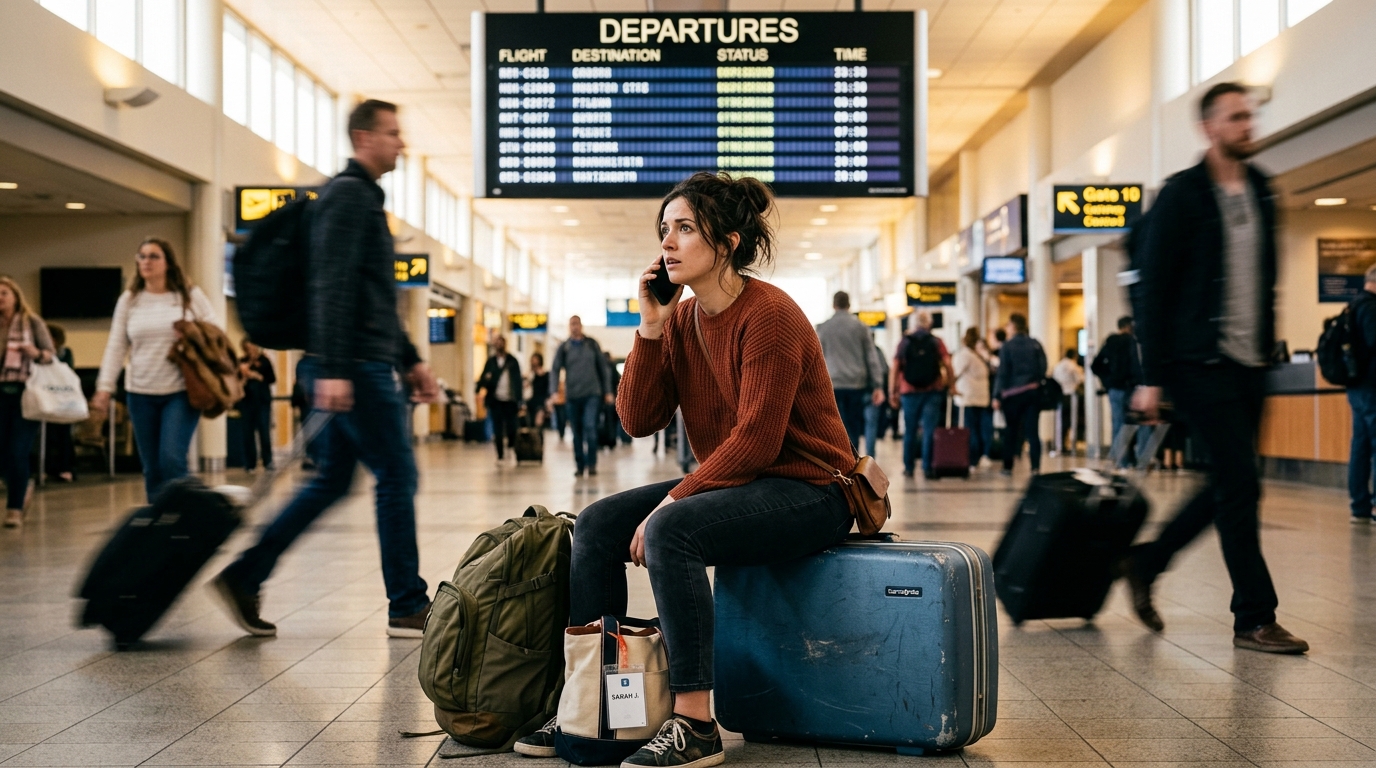
Missed your flight? Call the airline before you reach the desk.
Take a screenshot of the security line when you enter it, timestamped. If you're filing a travel insurance claim for a missed flight due to TSA delays, visual evidence of the line length and your arrival time strengthens your case significantly.
When checkpoints close — as they have in Philadelphia — you're funneled to other terminals. The key thing to know: once you clear security at any checkpoint, you can walk between terminals airside without re-screening. At PHL, that means entering at Terminal B and walking to your gate in Terminal F is possible, even though Terminal F's checkpoint is closed. At DFW, you can take the Skylink train between terminals post-security. Check your airport's website before heading to the terminal — don't waste time queuing at a closed checkpoint.
How to Check Wait Times Before You Leave Home
Don't guess. Real-time data exists — use it before you leave, and again when you're in the car on the way to the airport. Knowing the current wait time lets you decide whether to grab coffee at home or sprint to the curb.
- MyTSA App — shows current and predicted wait times by terminal and hour. Available for iOS and Android. Best for checking the night before or early morning.
- Airport websites — Many airports (ATL, SEA, DFW, BOS) now publish live checkpoint-specific wait times. ABC News recommends checking these directly, as they're often updated more frequently than the federal app.
- CNN's live tracker — real-time wait time monitoring at major airports during the crisis. Useful for a quick visual overview.
- Your airline's notifications — Most major carriers send push notifications about security conditions at your departure airport. Make sure notifications are enabled in your airline app.
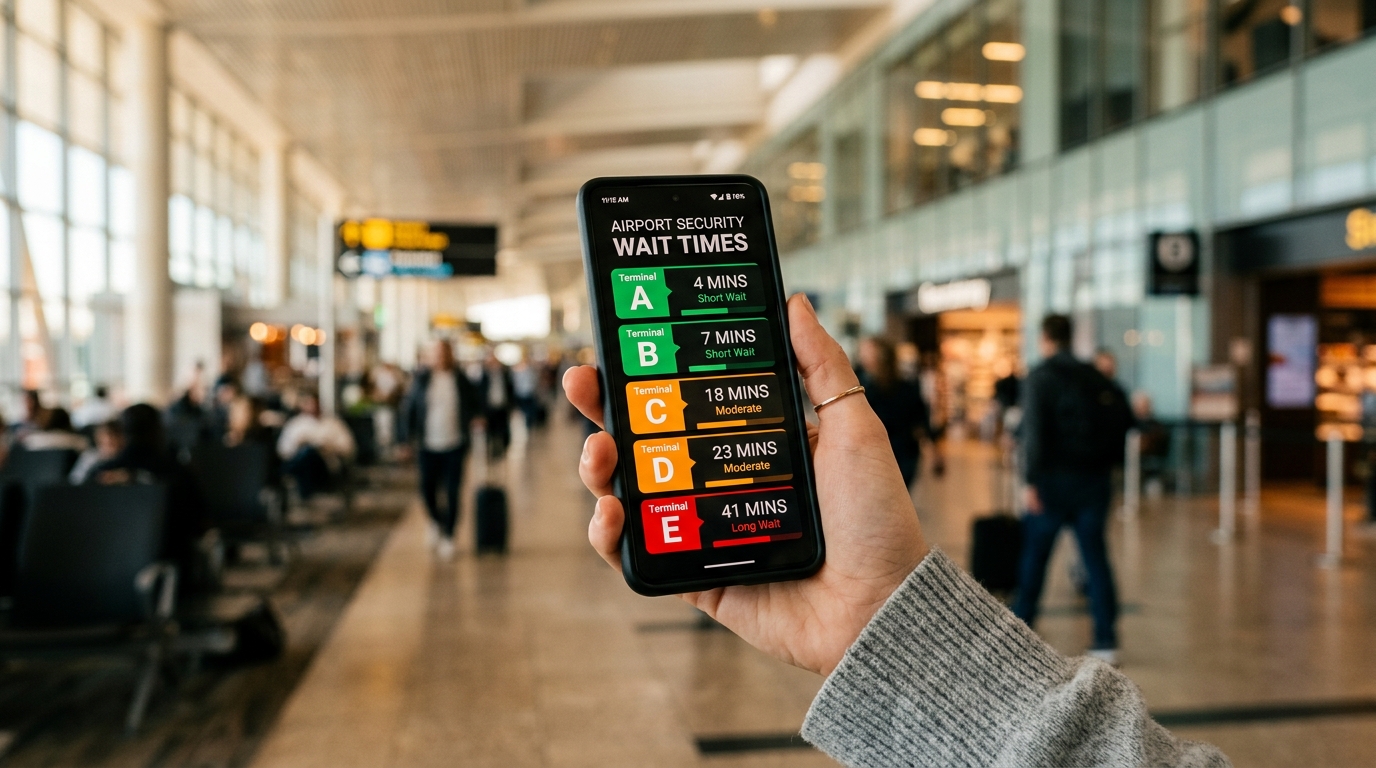
Check before you leave home — not when you're already in line.
If you're 3+ hours from your flight, check the MyTSA app for overall wait estimates. If you're in the car heading to the airport, pull up your specific airport's website for terminal-level data. And if you're already at the airport deciding which checkpoint to use, the airport's own site will have the most granular, up-to-the-minute numbers.
If you're coordinating travel with a group, having everyone check wait times and share updates makes the difference between one person missing the flight and the whole group making it. Planning tools like TripProf let everyone in the group share documents, itineraries, and checklists in one place — so when plans shift last-minute, nobody's left checking a stale group chat.
For a deeper comparison of tools that handle group coordination, see our guide to the best group travel planning apps.
Frequently Asked Questions
How long are TSA wait times right now?
It depends on the airport. The worst-hit hubs — Houston Hobby, Atlanta, and New Orleans — have reported waits of 2-3+ hours. PreCheck lanes are averaging 4-15 minutes at the same airports. Check the MyTSA app for live times at your terminal.
Is TSA PreCheck still working during the shutdown?
Yes. PreCheck lanes are still operational at most airports, though a few have temporarily closed dedicated PreCheck checkpoints (Philadelphia's Terminal C, for example). PreCheck is by far the most effective way to reduce your wait time during the current crisis.
Will airlines rebook me if I miss my flight due to TSA lines?
Airlines aren't required to rebook you for free if you miss your flight due to TSA delays, since the airline didn't cause it. However, most carriers will put you on standby for the next available flight at no charge on the same day. Call the airline while you're still in the security line to get ahead of the rebooking queue.
When will the TSA crisis end?
The crisis ends when Congress passes a DHS funding bill. As of March 19, 2026, there's no deal in sight. The shutdown began February 13, and congressional negotiations remain stalled over immigration reform provisions. Plan for continued disruptions through at least April.
Do I need a REAL ID to fly right now?
Yes. Since May 7, 2025, REAL ID enforcement is active. If your state license doesn't have the gold star, you'll need an alternative (passport, military ID, or Global Entry card) or pay the $45 TSA ConfirmID fee — which adds 30+ minutes to your screening and is valid for only 10 days.
What is TSA Touchless ID and how do I sign up?
Touchless ID uses facial recognition to verify your identity in about 10 seconds at PreCheck checkpoints. It's free for PreCheck members. Sign up through your airline's app or profile page by adding your Known Traveler Number and passport details, then opt in. Currently available at 15 major airports including ATL, JFK, LAX, ORD, and DFW.
Can I reserve a spot in the security line?
At five airports, yes — for free. Seattle (SEA Spot Saver), Minneapolis-St. Paul (MSP Reserve), JFK Terminal 4, Phoenix, and Orlando all offer online time slot reservations. Book as soon as you have your flight confirmation.
Sources
- CNN — Flyers face hourslong lines as TSA agents quit — officer quit numbers, callout rates
- CNBC — U.S. says it may shut down some airports — callout rate data, Deputy Administrator quote
- NPR — TSA workers miss a full paycheck — paycheck timeline, security fee context
- NBC News — Long security lines form at airports — arrival time recommendations
- NBC News — Philadelphia closes more checkpoints — PHL checkpoint closure details
- Travel and Tour World — DFW Spring Break 2026 — 171M passenger forecast, DFW numbers
- AOL/AP — More than 200 TSA employees fired — 243 probationary employee terminations
- CBS News — TSA PreCheck Touchless ID — Touchless ID enrollment and airports
- ABC News — How to find airport security wait times — tips and wait time tools
- Wayne County Airport Authority — TSA $45 REAL ID fee — ConfirmID details
- Delta — Same-Day Flight Changes — $75 confirmed change fee, free standby
- Chase — Trip Delay Reimbursement — $500/ticket coverage after 6-hour delay
Key Takeaways
- Arrive 3-5 hours early depending on your airport — the old 2-hour rule doesn't apply right now.
- Get TSA PreCheck (starting at $77 for 5 years) — it's the single most effective thing you can do. PreCheck lines are 4-15 minutes while standard lines hit 2-3 hours. Price varies by enrollment provider.
- Enable Touchless ID if you have PreCheck — it's free and cuts identity verification to 10 seconds at 15 airports.
- Book a free Spot Saver slot at SEA, MSP, JFK T4, PHX, or MCO to skip the general queue entirely.
- Check live wait times on the MyTSA app or your airport's website before you leave home — and again when you're on the way.
- Bring your passport as backup ID — the $45 REAL ID penalty and 30-minute delay aren't worth the risk.
- Fly early morning or midweek when callout rates and passenger volumes are lowest.
- If you're coordinating group travel, use a shared planning tool like TripProf so everyone has the same documents and checklists — one missed flight can throw off the whole trip.
Last updated: March 21, 2026
Keep Reading
More travel tips and guides picked for you

Solo Travel Burnout: When the Adventure Stops Being Fun
You saved for months and told everyone about this trip. Now you can't get out of bed. Solo travel burnout is real — here's how to spot it, tell it apart from a bad day, and fix it.
Your Flight Got Cancelled: How to Get Your Money Back
Your airline cancelled your flight and offered a voucher. You're owed cash — and if you're flying in Europe, up to €600 on top. Here's the step-by-step playbook for US and EU passengers.
The Travel Document Checklist You Actually Need (2026)
Three major travel document rules changed in 2025-2026. REAL ID, ETIAS, UK ETA, passport validity — here's every requirement, deadline, and fee in one checklist.