First International Trip? The 15 Mistakes That'll Cost You
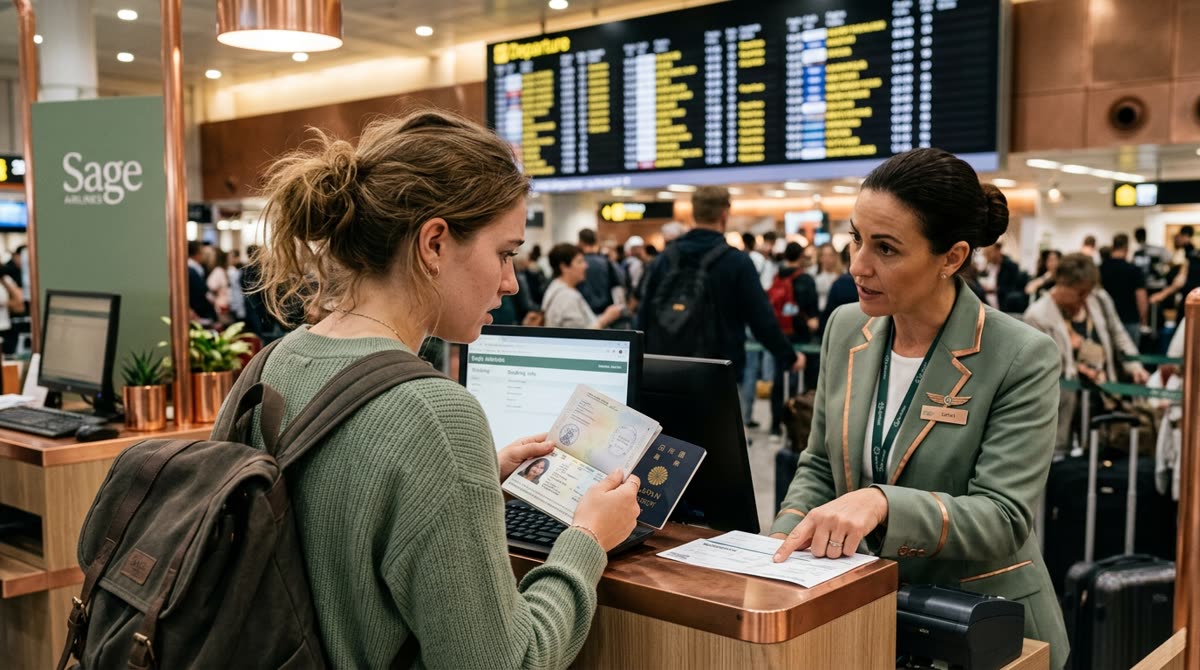
The moment every first-trip mistake becomes real: "This isn't valid."
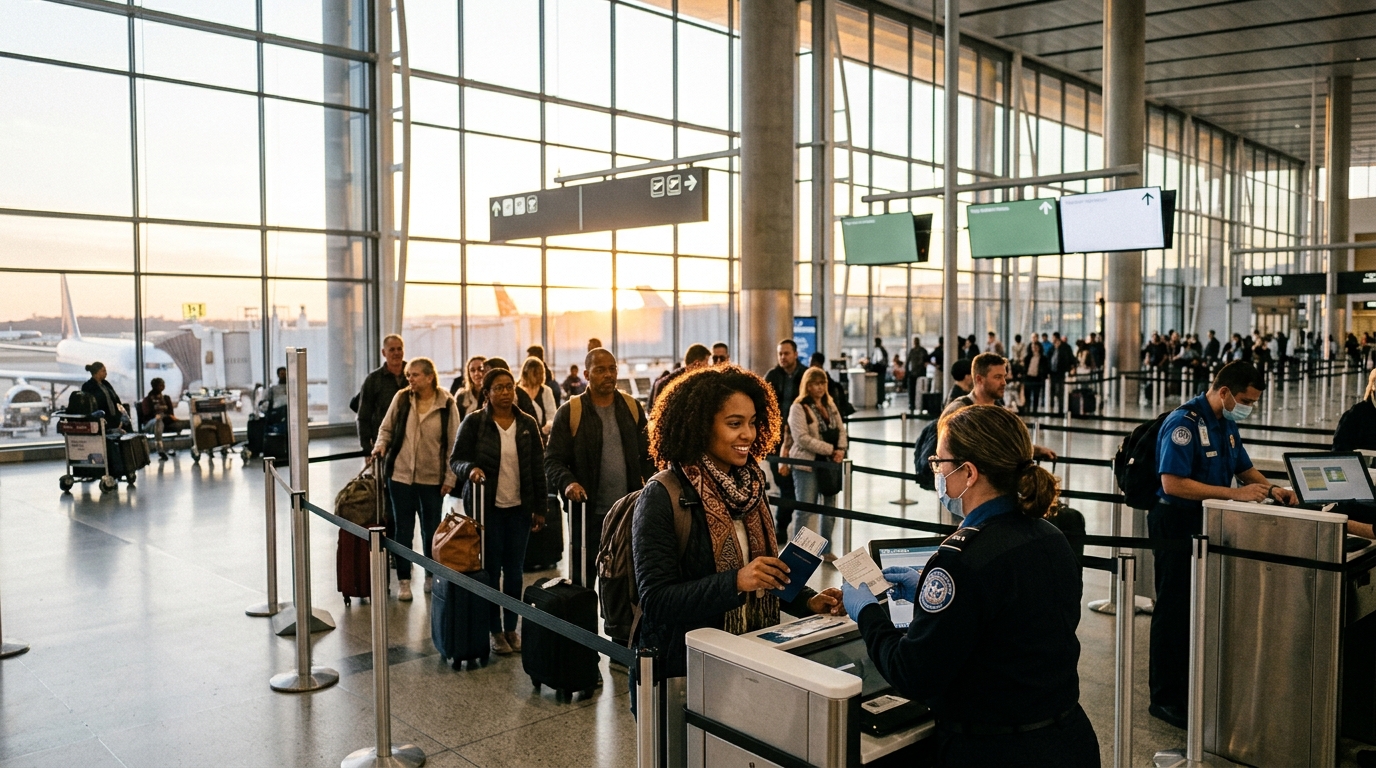
You're standing at the airline check-in counter, passport in hand, and the agent says three words that cancel your trip: "This isn't valid." Your passport doesn't expire for five months — but your destination requires six. You did everything right except the one thing you didn't know to check.
That's the thread connecting every mistake on this list. Not laziness, not inexperience — just missing a piece of destination-specific information that nobody told you to look up. With a record 1.52 billion international tourist arrivals recorded in 2025, more people than ever are flying abroad for the first time. And they are all learning the same lessons the expensive way: the passport rule is different for every country. So is the visa situation, the tipping culture, the taxi scam playbook, and the cash vs. card balance — whether you are flying from New York, London, or Sydney.
Here are 15 of those mistakes — and the one research habit that prevents all of them. Even if you have traveled before, stay for mistakes #7 and #9. That's where real money quietly disappears.
Most first-trip mistakes come from the same root cause: not researching your specific destination. The passport six-month rule, DCC scams, wrong tipping, roaming charges — all preventable with a pre-trip research checklist covering entry, money, health, transport, connectivity, culture, weather, and documents. Build one yourself or use a tool that compiles it for you.
Before You Leave — The Mistakes That Cancel Trips
These three mistakes happen weeks before your flight — and they are the most expensive because they can cancel your trip entirely.
Mistake 1: Assuming Your Passport Is Fine Because It Hasn't Expired
Your passport expires in four months. You think: "Four months is plenty — I'm only going for ten days." Wrong. More than 70 countries require at least six months of validity beyond your travel dates. The list includes Thailand, China, Turkey, the UAE, and most of Southeast Asia. Airlines enforce this at check-in — not at the gate, not on arrival. If your passport falls short, you don't board.
The fix: Check your destination's specific passport validity requirement — not the general rule, the actual rule for the country you are visiting. Your government's foreign travel advisory website will have it.
Mistake 2: Guessing You Don't Need a Visa
Americans can visit most of Europe without a visa — for now. The EU's ETIAS system, expected to launch in late 2026 with mandatory enforcement in 2027 (as of March 2026 — this date has been delayed multiple times), will require pre-travel authorization for visa-exempt travelers visiting the Schengen Area. It is not a visa, but you will need to apply online and get approved before departure. Many travelers don't know about this yet, and showing up without ETIAS authorization could mean denied boarding.
Beyond Europe, visa requirements are wildly inconsistent. Australian ETA, Indian e-Visa, Turkish e-Visa — each has different processing times, costs, and requirements. Some take minutes; some take weeks.
The fix: Check visa requirements for your specific passport and destination at least 6 weeks before travel. Your government's consular website lists entry requirements for every country.
Mistake 3: Skipping Travel Insurance Because "Nothing Will Happen"
According to JustTravelCover's 2026 claims data, medical emergencies abroad are the most expensive claim type. A hospital visit in the US can cost uninsured foreign visitors tens of thousands of dollars. Even in countries with public healthcare, tourists typically don't qualify for free treatment.
Allianz's 2024 claims report found that trip cancellations, interruptions, and travel delays were the most frequent claim categories. Yet according to HelloSafe's 2026 Travel Insurance Barometer, only about 40% of US travelers purchase travel insurance — up from 28% before the pandemic, but still meaning the majority travel uninsured. Battleface's 2025 analysis found that 88% of policies sold are for international trips specifically — the exact scenario where you need coverage most.
The fix: Buy travel insurance that covers medical evacuation and trip cancellation for your specific destination. Compare plans for your trip duration and activities, and read the policy — not the marketing page.
Notice the pattern? Every one of these mistakes comes from the same gap: not knowing the rules for your specific destination. That pattern holds for the next twelve mistakes too.
At the Airport — The Expensive Rookie Errors
The most expensive airport mistakes are not dramatic — nobody gets denied boarding. They are quiet: a bad exchange rate, an unnecessary checked bag, a layover that looked fine on paper. You will not realize the cost until you check your bank statement later.
Mistake 4: Exchanging Currency at the Airport
Airport currency exchange counters survive on one thing: travelers who don't know better. According to NerdWallet, the markup is typically around 14% above mid-market rates, with some airport counters exceeding 17%. On a $500 exchange, that is roughly $70 gone before you leave the terminal. Some counters advertise "zero commission" while hiding the fee inside a terrible exchange rate.
The fix: Use a travel-friendly debit card at a local ATM in your destination. Or exchange a small amount at your home bank before departure for initial taxi and transit costs.
Mistake 5: Booking a Short International Layover
A 90-minute layover works on domestic flights. On international connections, you may need to clear immigration, collect and re-check bags, go through security again, and sometimes change terminals. Two hours is tight. Three hours is safe. Under 90 minutes is gambling.
What to do instead: Book at least 2.5–3 hours for international connections. More if the connecting airport is large (London Heathrow, Istanbul, Dubai).
Mistake 6: Checking a Bag You Don't Need to Check
According to SITA's 2024 Baggage IT Insights report, airlines mishandled 6.3 bags per 1,000 passengers — costing the industry over $5 billion. That is a lot of lost luggage. The more connections you have, the higher your risk.
The fix: If you can travel carry-on only, do it. If not, pack essentials (medications, a change of clothes, charger) in your carry-on so a lost checked bag doesn't ruin your first day.
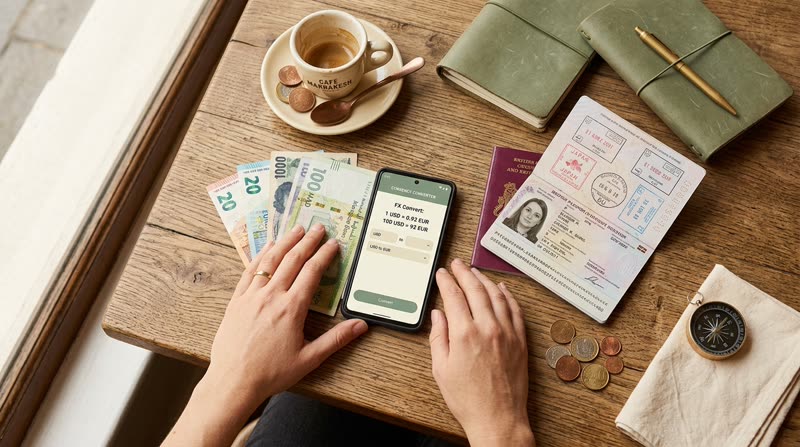
Money Abroad — Where First-Timers Lose the Most
Money mistakes are the quietest and the costliest. You won't feel them in the moment — just when you check your bank statement two weeks later.
Mistake 7: Falling for Dynamic Currency Conversion (DCC)
You pay with your card in a foreign country. The terminal asks: "Pay in your home currency or local currency?" It sounds helpful. It is a trap.
When a terminal offers to charge you in your home currency, the store or ATM sets the exchange rate — typically 3–12% worse than your bank's rate. On a €200 dinner, that is €6–14 extra. Across a two-week trip, DCC fees can add up to hundreds. According to The Points Guy, always choose the local currency — every time.
Mistake 8: Not Telling Your Bank You're Traveling
Your first card transaction abroad gets flagged as fraud, and your bank freezes your account. You're standing in a foreign ATM vestibule with no cash and a locked card. Some banks have dropped travel notifications in favor of better fraud algorithms, but many still require them — especially credit unions and smaller banks.
Here is what works: Call your bank or set a travel notice through the app. Check whether your card charges foreign transaction fees (typically 1–3%). If it does, consider getting a no-foreign-fee card before your trip.
Mistake 9: Not Knowing Whether Your Destination Uses Cash or Cards
Japan is one of the world's most technologically advanced countries — and it runs heavily on cash. Germany, the largest economy in Europe, has a well-documented preference for cash over card. Meanwhile, Sweden and the Netherlands are nearly cashless. Showing up in the wrong country with the wrong payment strategy means either carrying too much cash (risky) or finding yourself unable to pay for street food, small shops, or transit.
Region | Cash vs. Card | What to Know |
|---|---|---|
Japan | Cash-heavy | Many restaurants, temples, and small shops are cash-only |
Germany / Austria | Cash-preferred | Restaurants often cash-only or card with minimum spend |
Sweden / Netherlands | Nearly cashless | Some shops actively refuse cash |
Southeast Asia | Cash-heavy | Markets, street food, and tuk-tuks are all cash |
UK / Australia | Card-dominant | Contactless accepted almost everywhere |
Morocco / Egypt | Cash-essential | Cards accepted only in tourist hotels and upscale restaurants |
The fix: Research the cash/card balance for your specific destination before you pack your wallet. Arrive with some local currency for the first day, then adjust based on what you find on the ground.
On the Ground — The International Travel Mistakes Nobody Warns You About
Once you land, a new category of mistakes kicks in — roaming charges, taxi scams, wrong tipping, and dress code violations at cultural sites. These will not cancel your trip, but they drain your budget and your confidence. And almost every one of them is completely destination-specific.
Mistake 10: Using Your Phone Without an eSIM or Local SIM
International roaming charges are a well-documented problem. International roaming remains one of the most expensive surprises for travelers. Without an international plan, US carriers charge up to $2.05 per megabyte — that is over $2,000 per gigabyte of data. A single day of accidental roaming can run into the hundreds of dollars, depending on your carrier and destination.
Buy an eSIM before you leave home. Providers like Airalo, Holafly, and Nomad sell destination-specific data plans starting around $5 for a week. Your phone gets a local data connection the moment you land — no SIM card swap, no hunting for a shop at the airport.
Mistake 11: Taking the First Taxi Outside the Airport
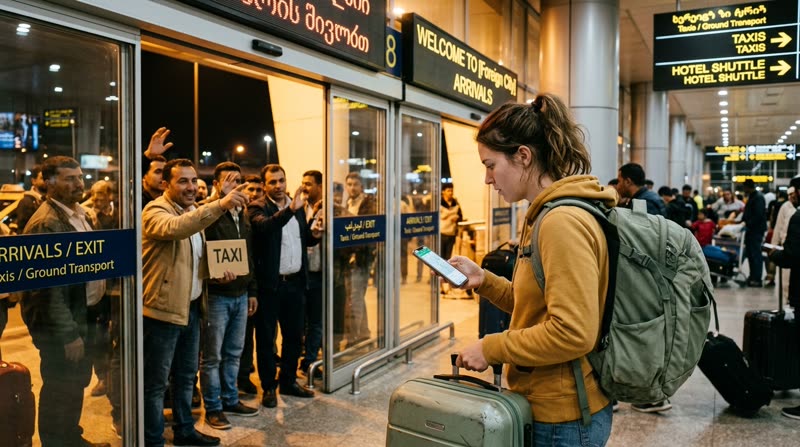
Airport taxi scams exist on every continent. You step out of arrivals in Bangkok, Istanbul, or Marrakech, and someone in a polo shirt says "Taxi? Good price." The quote is three times the metered fare — but you don't know that yet because you have no idea what a ride into the city should cost. Rigged meters, "scenic routes" through traffic, flat rates to the wrong hotel — these are not rare. They are among the most common complaints first-time travelers report, and they happen most at airports where you are tired, disoriented, and carrying everything you own.
Here is what works: Before you land, search "[your airport] official transport to city center" — most major airports list official taxi ranks, pre-paid counter locations, and train connections on their website. Know the standard fare before someone approaches you in the arrivals hall.
Mistake 12: Tipping Wrong — Too Much, Too Little, or at All
In the US, 20% is standard. In Japan, tipping is considered rude — some restaurant owners will chase you down to return the money. In Iceland and South Korea, tipping is uncommon and can cause confusion. In many European countries, rounding up a euro or two is generous. Tipping the wrong amount is awkward at best and offensive at worst. And the rules are different for restaurants, taxis, hotels, and tour guides — even within the same country.
The fix: Look up tipping norms for your destination before you sit down at your first restaurant. Your government's travel advisory site or a dedicated travel guide will have country-specific breakdowns for restaurants, taxis, and hotels.
Mistake 13: Wearing the Wrong Thing to a Temple, Mosque, or Church
Shorts and tank tops at Angkor Wat? You will be turned away at the entrance. No headscarf at the Blue Mosque? Same. Exposed shoulders at the Vatican? Denied entry. Dress code requirements at religious and cultural sites catch first-time travelers off guard because the rules vary by site, country, and religion — and they are strictly enforced. Some sites rent cover-ups at the entrance, but nothing says "I did not prepare" quite like a €5 disposable poncho over your tank top.
The smart move: Pack one lightweight long-sleeve shirt and a scarf that can cover shoulders and knees. They weigh almost nothing in your bag, and you will use them more than you expect. Research dress codes for specific sites you plan to visit.
The common thread? The fix is different for every country. Japan's tipping rules have nothing to do with Turkey's. Thailand's dress codes are not the same as Italy's. Generic advice only gets you so far — you need destination-specific answers.
The Planning Mistakes That Compound
These last two don't hit you at a specific moment. They grind you down across the entire trip.
Mistake 14: Overpacking Because You Didn't Check the Weather or Local Norms
You pack for "Europe in October" — but Portugal in October is still 22°C and sunny while Scotland is 8°C and raining sideways. Pack for both, and you need a second suitcase. Pack for neither, and you are buying an emergency sweater in Edinburgh. Packing without checking the actual forecast for your destination means bringing clothes you won't wear and missing clothes you'll need. Combine that with not knowing local dress norms — is this a "jeans and sneakers" city or a "dress up for dinner" city? — and you end up overdressed, underdressed, or lugging a suitcase twice the size it needs to be.
Mistake 15: Scattering Travel Documents Across Email, Screenshots, and Hope
Boarding pass in your email. Hotel confirmation in a WhatsApp message. Insurance policy downloaded to your laptop but not your phone. Visa approval somewhere in your Gmail search results. When you need a document at a border crossing or check-in desk, "I know it's here somewhere" is not a strategy.
What prevents both: Organize before you go. Check the weather for your specific dates and destination, research local dress norms, and put every document in one accessible place — a cloud folder, a travel app, or even a single email thread you can find offline.
The Real Fix for First International Trip Mistakes — A Pre-Trip Checklist
Every mistake on this list traces back to one gap: missing destination-specific information. Not "international travel tips" — the specific rules, norms, and details for the exact country you are visiting.
Instead of Googling fifteen different things and hoping you've covered everything, build a single pre-trip checklist:
Category | What to Research | Mistakes Prevented |
|---|---|---|
Entry Requirements | Passport validity, visa/ETIAS, customs limits | #1, #2 |
Money | Cash vs. card balance, DCC awareness, bank notification | #4, #7, #8, #9 |
Health | Insurance, vaccines, pharmacy access, tap water safety | #3 |
Transport | Airport to city, taxi norms, public transit, rideshare availability | #5, #11 |
Connectivity | eSIM options, power adapters, wifi reliability | #10 |
Culture | Tipping norms, dress codes, dos and don'ts | #12, #13 |
Weather | Forecast for your dates, seasonal norms, layering needs | #14 |
Documents | Store all confirmations, policies, and IDs in one place | #6, #15 |
That is eight categories. Research each one for your destination, and you have covered every mistake on this list. Here are three numbers that show why it matters:
You can build this checklist in a spreadsheet, a note-taking app, or a dedicated travel planning tool. If you are traveling with a group, a shared tool becomes even more important — one person's missed research can affect the entire trip. Whether you use a tool like TripProf — which compiles 60 sections of destination-specific information into a single personalized guide — or do the research yourself, the important thing is that the research actually happens. Most first-trip mistakes are not caused by bad decisions. They are caused by decisions you didn't know you needed to make.
Frequently Asked Questions
What is the biggest mistake first-time international travelers make?
Not researching destination-specific entry requirements — especially passport validity rules. Over 60 countries require at least six months of validity beyond your travel dates. This is the one mistake that can cancel your trip entirely, and it's easily preventable with a 5-minute check on your government's travel advisory site.
Do I need a visa to travel to Europe in 2026?
If you're from a visa-exempt country (like the US, UK, Canada, or Australia), you don't need a traditional visa for short stays in the Schengen Area. But the EU is expected to launch ETIAS — a pre-travel authorization system — in late 2026, with mandatory enforcement in 2027. You will need to apply online and get approved before boarding.
Should I exchange currency at the airport?
No. Airport exchange counters typically mark up rates by 8–15%. Use a no-foreign-fee debit card at a local ATM, or exchange a small amount at your home bank before departure. Always choose "local currency" when a card terminal asks.
What is Dynamic Currency Conversion and how do I avoid it?
DCC is when a foreign card terminal offers to charge you in your home currency instead of the local one. It sounds convenient but adds a 3–12% markup. Always select the local currency when given the choice — your bank will give you a better exchange rate.
Do I really need travel insurance for a short trip?
Yes. Medical emergencies abroad can cost tens of thousands of dollars, especially in countries without universal healthcare for tourists. Even a one-week trip justifies basic coverage for medical emergencies, trip cancellation, and lost luggage. Compare plans for your specific destination and trip duration.
How do I avoid roaming charges when traveling internationally?
Buy an eSIM before you leave. Providers like Airalo and Holafly sell destination-specific data plans starting around $5. Turn off cellular data for your home SIM before departure, and connect through the eSIM for local data.
Key Takeaways
Every first-trip mistake on this list traces back to one root cause: missing destination-specific information.
Check your passport's validity against your destination's specific requirement — not the expiration date, the six-month rule.
Always choose the local currency when paying by card abroad. Saying yes to your home currency triggers DCC — a 3–7% hidden fee.
Buy an eSIM before departure. It costs $5–15 and prevents roaming charges that can run into the hundreds per day.
Research your destination's cash vs. card culture. Japan and Germany run on cash; Sweden and the Netherlands are nearly cashless.
Build a pre-trip research checklist covering entry, money, health, transport, connectivity, culture, weather, and documents.
Tools like TripProf compile destination-specific information across 60 guide sections into one personalized travel guide — covering every category on that checklist and working offline during your trip.
Your first international trip should be defined by what you discover — not by what you forgot to look up. Do the research, build the checklist, and the mistakes on this list become someone else's story.
Keep Reading
More travel tips and guides picked for you

Solo Travel Burnout: When the Adventure Stops Being Fun
You saved for months and told everyone about this trip. Now you can't get out of bed. Solo travel burnout is real — here's how to spot it, tell it apart from a bad day, and fix it.
Your Flight Got Cancelled: How to Get Your Money Back
Your airline cancelled your flight and offered a voucher. You're owed cash — and if you're flying in Europe, up to €600 on top. Here's the step-by-step playbook for US and EU passengers.
The Travel Document Checklist You Actually Need (2026)
Three major travel document rules changed in 2025-2026. REAL ID, ETIAS, UK ETA, passport validity — here's every requirement, deadline, and fee in one checklist.