Packing Hacks That Actually Work (And 5 That Don't)
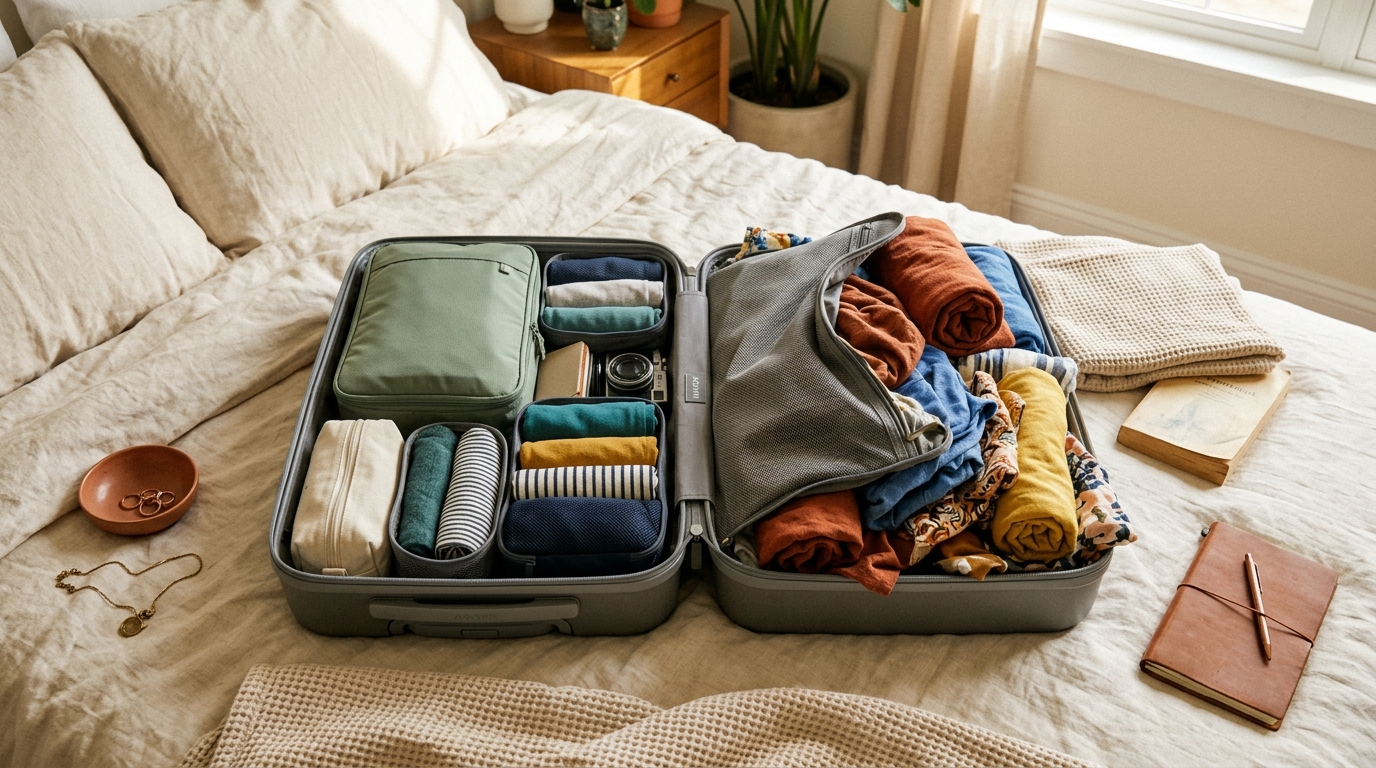
You're sitting on your suitcase. Again. One knee on the lid, yanking the zipper with both hands, wondering how a week-long trip turned into what looks like a month-long relocation. Meanwhile, dozens of articles promise "genius packing hacks" — and half of them are the reason you're in this mess.
Here's which packing hacks actually work, which five are a waste of time, and the one rule that changes how you pack forever.
Skip vacuum bags, stop rolling everything, and ditch the "just in case" outfits. The hacks that actually work: the 20/20 rule (leave it home if you can buy it for under $20 in under 20 minutes), packing cubes for organization (not compression), and wearing your heaviest items on the plane. Simple beats clever.
5 Packing Hacks That Don't Work
The five most overrated packing hacks are vacuum bags, rolling everything, the "fragile" sticker trick, decanting all your toiletries, and packing "just in case" outfits. Each one either wastes your time, doesn't work on the road, or actively encourages overpacking.
| "Hack" | Why It Fails | Do This Instead |
|---|---|---|
| Vacuum compression bags | Great at home, useless on the road. You need a pump or vacuum to re-seal them after opening. Your clothes come out looking like crumpled paper. | Use compression packing cubes — they squeeze air out with a zipper and work anywhere. |
| Rolling everything | Rolling saves roughly 15-20% space for t-shirts and lightweight fabrics. But roll a sweater or button-down? You waste space and add wrinkles. | Roll thin items (tees, underwear, casual pants). Fold bulky knits and structured pieces flat. |
| The "fragile" sticker trick | Slapping a fragile tag on your checked bag won't get it special treatment. With 33.4 million bags mishandled globally in 2024, baggage handling is industrial-scale — stickers don't slow the conveyor belt. | Pack breakables in your carry-on. Full stop. |
| Decanting everything into tiny bottles | You'll spend 30 minutes filling miniature containers, then forget which unlabeled bottle is shampoo vs. conditioner. Most hotels provide basics. Most destinations have pharmacies (though check for remote or rural stops). | Bring only what you can't buy there: prescription meds, specific skincare, sunscreen you trust. |
| Packing "just in case" outfits | That backup formal outfit for the dinner that might happen? The rain jacket for the 10% chance of drizzle? This is how 40% of travelers come home with unworn clothes. | Use the 20/20 rule (more on this below): if you can buy it for under $20 within 20 minutes at your destination, leave it home. |
The pattern is simple: bad packing hacks add complexity — more steps, more gear, more things to manage. The best packing strategy does the opposite. Overpacking is also one of the classic first-trip mistakes we've covered, right alongside forgetting to check your travel documents.
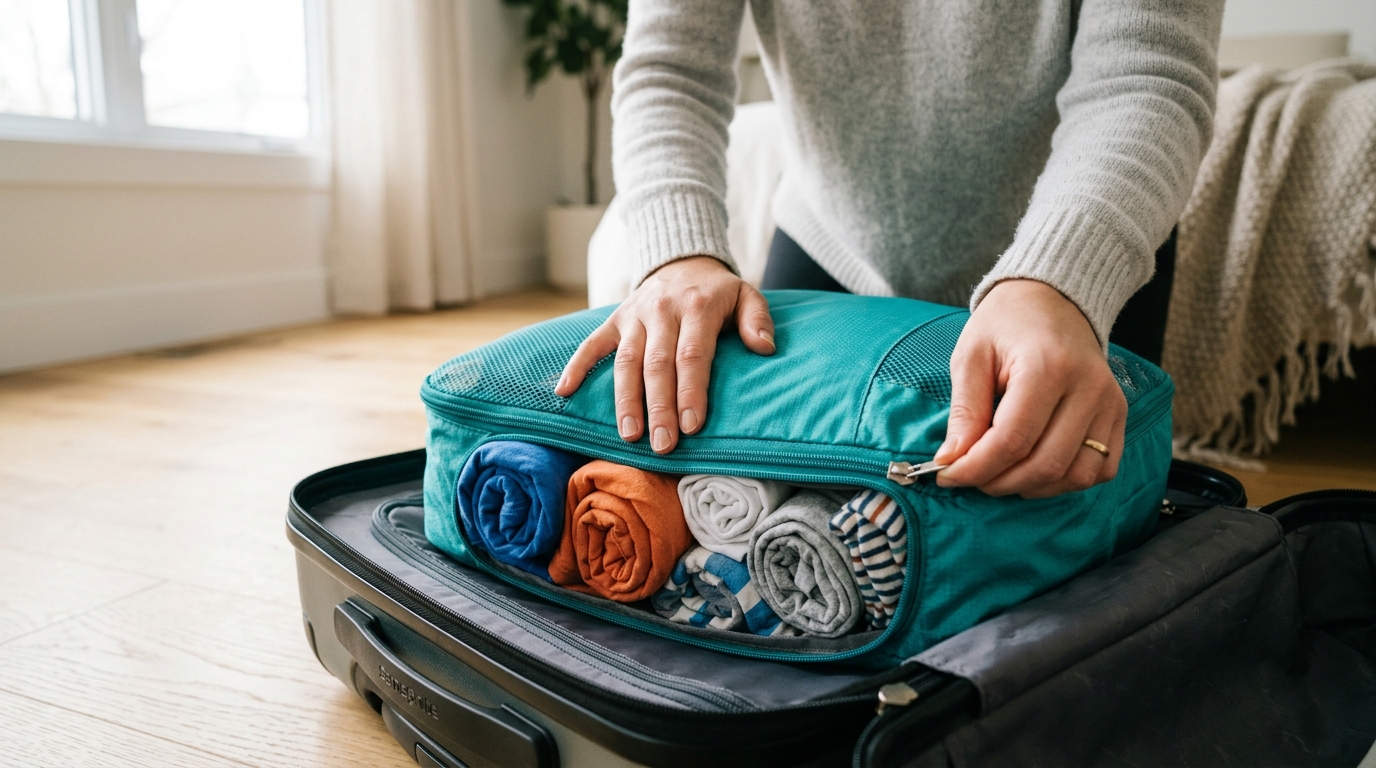
Compression cubes beat vacuum bags every time — no pump needed.
5 Packing Hacks That Actually Earn Their Hype
The packing hacks worth keeping are the ones that reduce decisions, not add gear. According to a 2019 OnePoll study, nearly 70% of Americans find packing stressful — and most of that stress comes from deciding what to bring, not how to fold it.
1. The 20/20 Rule
If you can replace an item for under $20 and find it within 20 minutes of arriving, leave it at home. Forgot a phone charger? Every airport sells them. Umbrella? Every convenience store has one. I've used this rule on every trip for three years — it's the single fastest way to halve what you pack.
2. Packing Cubes (But Not for Compression)
Here's the thing most articles get wrong: standard packing cubes don't actually save space. They impose structure — one cube for tops, one for bottoms, one for underwear and socks. You stop rummaging and start grabbing the right cube. Unpacking at a hotel takes 30 seconds instead of 10 minutes.
Stuff socks, chargers, and small accessories inside your shoes. Shoes waste the most space in any bag — rigid and hollow. Fill that dead space.
3. Wear Your Bulkiest Items on the Plane
Your heaviest jacket, your chunkiest shoes, your thickest hoodie — wear them, don't pack them. This alone can free up 2-3 liters of suitcase space. With US airlines now earning a record $7.27 billion from baggage fees in 2024, more travelers are going carry-on-only — and every cubic centimeter matters.
4. A $10 Luggage Scale
Overweight baggage fees on US airlines start at $100 for bags over 50 lbs (as of 2026). A pocket-sized digital scale fits in your toiletry bag and pays for itself on the first trip. Weigh before you leave, weigh before you fly home — souvenirs add up fast.
5. The Outfit-Per-Day Rule
Pack one outfit per day plus one wildcard. Not one outfit per scenario. Not one outfit per possible weather condition. One per day, plus one extra. For a 7-day trip, that's 8 outfits — not 15. Pick pieces that mix and match, and you'll look more put-together with less.
Frequently Asked Questions
Is it better to roll or fold clothes for packing?
Neither is universally better — match the method to the garment. Roll lightweight items (tees, underwear, casual pants) to save 15-20% space. Fold anything structured — blazers, dress shirts, thick knits. Many experienced packers do both in the same bag.
Do packing cubes actually save space?
Regular cubes don't compress anything — they organize. The real benefit is speed: grab one cube instead of digging through a pile. If you want actual compression, get cubes with a zipper panel that squeezes air out. But even standard cubes make packing and unpacking dramatically faster.
How many outfits should I pack for a week trip?
Eight: one per day plus one wildcard. The trick isn't bringing more — it's choosing pieces that work across multiple combinations. A neutral jacket, versatile shoes, and mix-and-match tops go further than seven completely separate outfits.
What's the best way to avoid overweight baggage fees?
A digital luggage scale (under $10) pays for itself on the first trip. Weigh your bag at home and again before your return flight — souvenirs and shopping are the silent killers. Also: wear your heaviest items on the plane instead of packing them.
Key Takeaways
- Kill the "just in case" mindset — the 20/20 rule eliminates most unnecessary items. If it's cheap and easy to replace at your destination, leave it home.
- Simple beats clever — packing cubes, a luggage scale, and the outfit-per-day rule do more than any viral hack. Skip the vacuum bags and the over-engineered rolling methods.
- Match the method to the fabric — roll lightweight items, fold structured pieces. One technique doesn't fit all materials.
- Use a packing checklist — apps like TripProf generate smart packing checklists based on your destination, trip length, and activities, so you pack what you need without the guesswork.
Your next trip doesn't need to start with you wrestling a zipper. Pack less, pack smarter, and save the energy for the trip itself.
Keep Reading
More travel tips and guides picked for you

How to Split Trip Costs Fairly With Friends
Money is the #1 source of tension on group trips. Three methods, matched to the right tools, keep the math clean and the friendships intact.

Solo Travel Burnout: When the Adventure Stops Being Fun
You saved for months and told everyone about this trip. Now you can't get out of bed. Solo travel burnout is real — here's how to spot it, tell it apart from a bad day, and fix it.
Your Flight Got Cancelled: How to Get Your Money Back
Your airline cancelled your flight and offered a voucher. You're owed cash — and if you're flying in Europe, up to €600 on top. Here's the step-by-step playbook for US and EU passengers.