How to Split Trip Costs Fairly With Friends
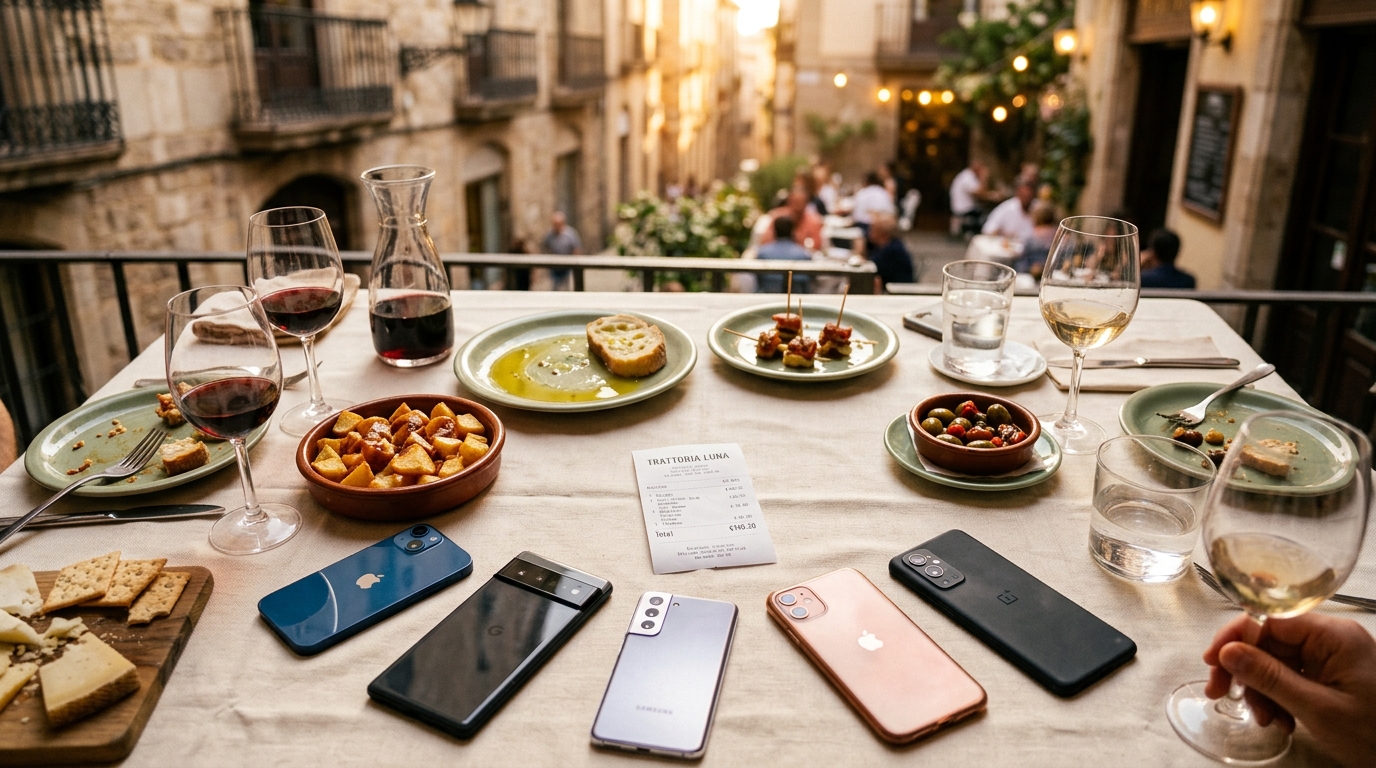
It's the last night in Lisbon. The bill lands on the table and five people reach for their phones — not to pay, but to calculate. Someone had only salads. Someone else ordered three cocktails. The person who booked the Airbnb still hasn't been paid back.
This is how friendships get weird. Not during the trip — after it. And it's one of the mistakes that catch first-time international travelers off guard.
According to a 2025 Experian survey, over half of Gen Z and millennial travelers have had a money-related disagreement with friends while traveling. One in five ended a friendship over it. The fix isn't complicated — it's choosing the right system before you leave.
Three methods work: common pot (equal upfront contributions) for close friends, proportional split (track and settle) for mixed budgets, category split (one person per expense type) for small groups. Use Tricount (free, unlimited) for most trips. Have the money talk in the group chat before you leave — 75% of groups skip this.
Three Ways to Split Trip Costs That Actually Work
The best way to split trip costs depends on your group size, budget similarity, and how much tracking you're willing to do. Three approaches consistently prevent conflict — each matched to a different kind of group.
| Method | How It Works | Best For | Effort |
|---|---|---|---|
| Common Pot | Everyone contributes equally upfront to a shared fund | Close friends, similar budgets | Low |
| Proportional Split | Track everything, settle exact amounts at the end | Mixed budgets, larger groups | Medium |
| Category Split | Each person "owns" a cost type (food, transport, lodging) | Small groups of 3–4 | Low |
Common pot is the simplest — and in our experience, the most underused. Everyone sends €200 to one person's account before the trip, and all group expenses come from that fund. Leftover gets split back at the end. We used this for a 5-person trip to Croatia: zero tracking, zero arguments, €40 back per person at the end.
If your group has mixed budgets or different activity preferences, the proportional split is fairer. Someone skips the €80 wine tour? They don't subsidize it. This is the method that makes expense apps essential.
Category split keeps things low-effort for small groups. One person covers all meals, another handles accommodation, a third gets transport. You balance the totals once at the end — fewer transactions, less math, and nobody opens an app at dinner.
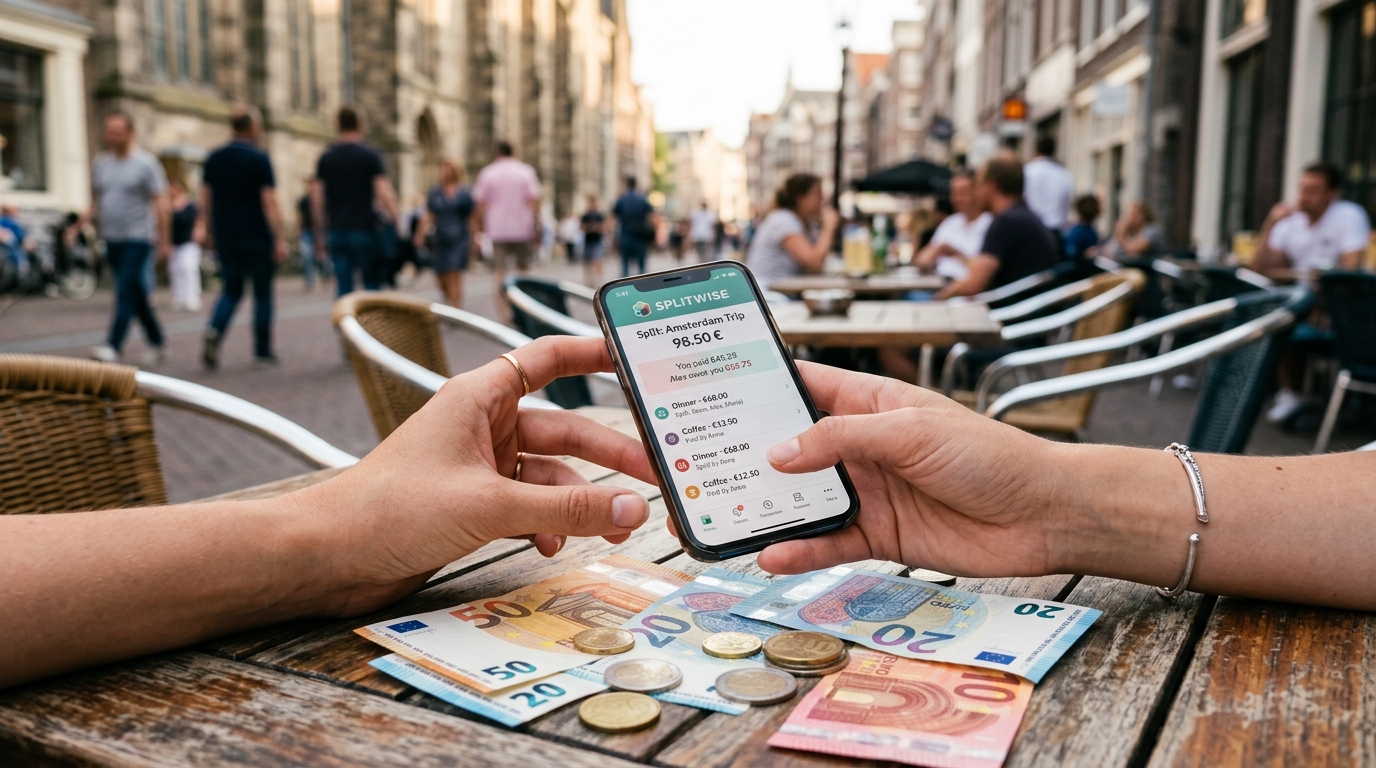
The right app turns post-trip math into a 30-second check.
"We'll figure it out later" is the most expensive sentence in group travel. Without a system agreed on before departure, someone always absorbs costs they shouldn't — and resentment builds silently.
Match Your Splitting Method to the Right App
Picking a method is half the job. The other half is choosing a tool that fits it — and the wrong app for your method creates more friction than no app at all. Here's what works as of 2026.
| App | Free Tier | Multi-Currency | Best Method Match |
|---|---|---|---|
| TripProf | Included with trip | Yes + receipt scanning | All methods (built into planning) |
| Tricount | Unlimited, no ads | Yes | Common pot, weekend trips |
| Splitwise | Limited (daily cap) | Yes | Proportional, trips 2+ weeks |
| Settle Up | Generous free tier | Yes | Custom splits, families |
If you're already using TripProf to plan your trip, its built-in expense tracker handles splitting, multi-currency conversion, and receipt scanning — no separate app needed. For a standalone expense-only tool, Tricount is solid: unlimited expenses, no ads, no paywall (though no receipt scanning). Splitwise has the best long-term tracking but caps free users at a few expenses per day (as of 2026). For a broader look at planning tools, see our guide to group travel planning apps.
The 5-Minute Pre-Trip Money Talk
According to a 2025 Experian survey, only one in four friend groups set a budget before traveling together. That means 75% are improvising — and the results show in post-trip tension.
Here's what to send in the group chat at least two weeks before departure:
"Quick money stuff so we don't have to think about it later: 1) Rough daily budget — are we thinking €50/day or €100/day? 2) Shared costs (Airbnb, rental car) — split equally? 3) Meals — split every bill or take turns? 4) I'll set up an expense app so we can track as we go."
Four questions. Five minutes. Most people are relieved someone brought it up — they were thinking about it too.
- Simple — no tracking needed
- Fast — divide by headcount
- Works when everyone does everything together
- Fair when budgets differ
- Requires an app to track
- Better for longer trips with varied activities
For most groups, a hybrid works best: split fixed costs (accommodation, car rental) equally, and track variable costs (meals, activities) by usage. And if someone stops tracking mid-trip? Do a quick catch-up over breakfast — five minutes with the app and a coffee prevents a week of guesswork later.
Frequently Asked Questions
What's the fairest way to split trip costs with friends?
It depends on your group. The common pot method — everyone contributes equally upfront — works for friends with similar budgets. For groups with different income levels or activity preferences, proportional splitting with an expense app ensures everyone pays only for what they actually used.
Should you split trip costs evenly or by what each person spent?
Even splits are simpler but only fair when everyone participates equally. If someone skips expensive activities or has dietary restrictions that lower their food costs, usage-based splitting prevents quiet resentment. The key: decide the approach before the trip starts, not halfway through.
How do you bring up money before a group trip without making it awkward?
Frame it as logistics, not confrontation. A casual group chat message 2–3 weeks before departure works: "Quick money stuff so we don't have to think about it later." Four questions about budget, shared costs, meals, and tracking. Most friends are relieved — they were thinking about it too.
What's the best free app for splitting group travel expenses in 2026?
Tricount is the strongest free option — unlimited expenses, no ads, solid multi-currency support. Splitwise has better long-term tracking but caps free users at a few expenses per day. Settle Up handles custom or uneven splits well, especially for families. All three work offline.
What do you do if expense tracking breaks down during the trip?
Don't wait until you're home. Do a 5-minute catch-up over breakfast — open the app, add any missing expenses together, and confirm balances. If someone stopped tracking entirely, estimate their share of shared costs and settle the difference. Imperfect tracking is still better than none.
Key Takeaways
- Pick your method before the trip: common pot for close friends with similar budgets, proportional split for mixed budgets, category split for small groups of 3–4.
- Use the right tool — TripProf's built-in tracker handles everything if you're already planning there. For standalone apps, Tricount is the best free option (though it lacks receipt scanning).
- Have the money talk early: one group chat message, four questions, five minutes. Three-quarters of friend groups skip this and end up with post-trip tension.
- Track shared expenses from day one — whether you use a standalone app or a built-in expense tracker like TripProf's, keeping a running total eliminates the end-of-trip scramble and the "who owes what" guessing game.
Your next group trip doesn't have to come with a side of financial drama. Set the system, send the message, and focus on the trip — not the math.
Keep Reading
More travel tips and guides picked for you

Best Group Travel Planning Apps in 2026
Eight group travel planning apps compared on collaboration, expenses, documents, and memories — with honest pros, cons, and a clear recommendation for each type of group trip.

Packing Hacks That Actually Work (And 5 That Don't)
Most packing advice is recycled nonsense. Here are 5 popular hacks that don't work, plus the ones that actually save space — backed by data.

Solo Travel Burnout: When the Adventure Stops Being Fun
You saved for months and told everyone about this trip. Now you can't get out of bed. Solo travel burnout is real — here's how to spot it, tell it apart from a bad day, and fix it.