The Travel Document Checklist You Actually Need (2026)
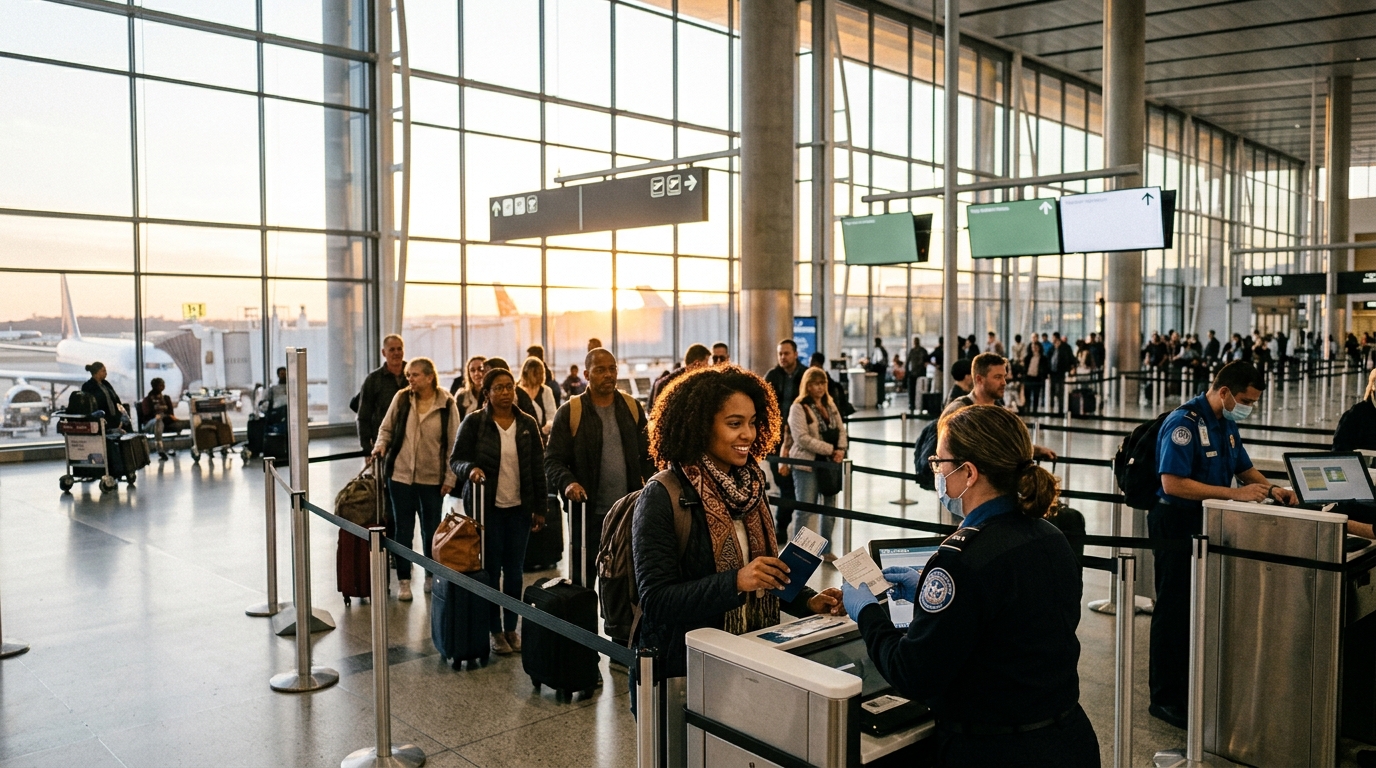
You're at the TSA checkpoint in Atlanta, boarding pass in hand, (Here's our full airport survival guide.) Running five minutes behind. The agent scans your driver's license, pauses, and asks: "Do you have another form of ID?" Your license doesn't have the star. You didn't bring your passport. And as of February 2026, that means a $45 fee, a 30-minute secondary screening, and zero guarantee you'll make your flight.
Four travel document rules changed in 2025 and 2026 — and most travelers missed at least one. This is the travel document checklist for 2026: every requirement, every deadline, every fee, and exactly what happens if you show up without the right paperwork. (Note: this guide focuses on requirements for US-based travelers, though the ETIAS and EES sections apply to all visa-exempt nationals.)
REAL ID is now enforced for US domestic flights — bring a passport if your license doesn't have the star. ETIAS (€20) launches late 2026 for 30 European countries. UK ETA (£16) is already required, even for transit. And check your passport has 6+ months validity before booking anything international.
What Changed in 2025-2026 (And Why Your Old ID Might Not Cut It)
Four new rules hit travelers in quick succession: REAL ID enforcement started May 2025 for domestic US flights, the UK now requires an Electronic Travel Authorization, the EU's biometric Entry/Exit System goes live in April 2026, and ETIAS — Europe's digital entry permit — launches late 2026. Most travelers haven't heard of at least one of these.
According to ABC News, the Department of Homeland Security estimated that roughly 38-39% of Americans with state-issued IDs were still non-compliant when REAL ID enforcement began in May 2025. The good news: compliance improved fast. By February 2026, TSA reported that 95-99% of travelers now present compliant ID at checkpoints. But that remaining 1-5% still faces the $45 fee — and the international changes are just getting started.
REAL ID — The Domestic Flight Rule That Finally Has Teeth
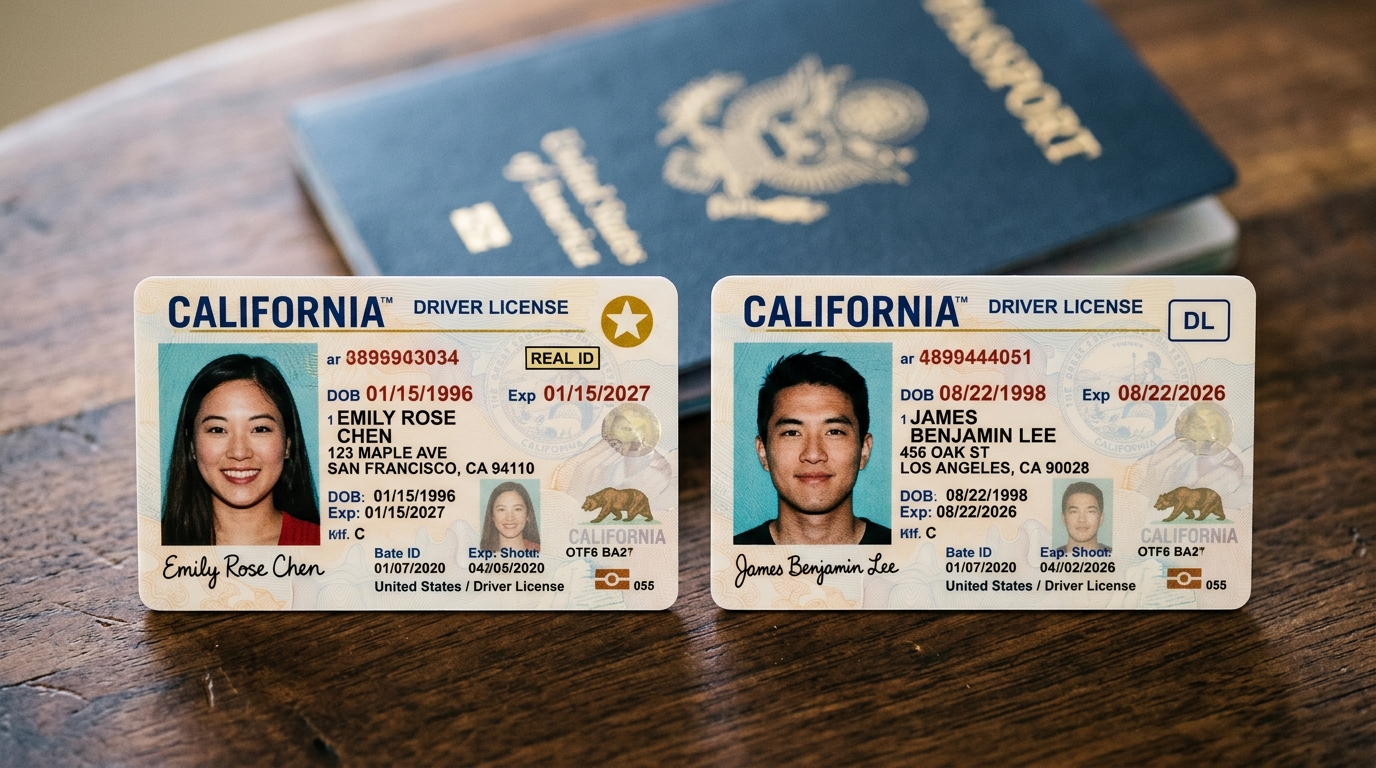
That little star makes all the difference at TSA.
Every US domestic flight now requires a REAL ID-compliant driver's license — or an acceptable alternative. The TSA began enforcing this on May 7, 2025, after years of delays. As of February 1, 2026, travelers without compliant ID face a $45 TSA ConfirmID fee, up to 30 minutes of additional screening, and no guarantee of clearance.
Look at your driver's license right now. See a star or flag in the upper corner? You're good. No star? You need to act.
The generational gap is telling. According to NPR, about a third of Gen X and Boomers still lacked REAL ID when enforcement began, while Gen Z was the most prepared generation at roughly 79% compliance. Compliance rates also varied wildly by state — some states were under 30% when enforcement started.
The good news: you have options beyond the REAL ID license.
| Document | Domestic Flights | International Travel | Notes |
|---|---|---|---|
| REAL ID License | Yes | No | Star/flag marking required |
| US Passport | Yes | Yes | Best universal option |
| US Passport Card | Yes | Land/sea only | $65 (as of 2026), no international flights |
| Enhanced DL | Yes | Canada/Mexico land | 5 states only: MI, MN, NY, VT, WA |
| Military ID | Yes | No | Active duty + dependents |
| Global Entry Card | Yes | No | Includes TSA PreCheck |
If you don't have REAL ID and don't want to deal with the DMV: your US passport works at every TSA checkpoint in the country. For frequent domestic travelers, it's the simplest fix.
A US passport is the only single document that works everywhere — domestic flights, international travel, and federal buildings. If you're going to invest in one document, make it the passport.
Your Passport — The 6-Month Rule Nobody Tells You About
Your passport might be technically valid and still get you turned away at the border. According to World Population Review, more than 70 countries require at least six months of remaining validity on your passport from your date of entry — and airlines can deny boarding if you don't meet this threshold. The U.S. State Department confirms that Schengen Area countries require three months of validity beyond your planned departure date.
Here's a scenario that plays out at airports every week: you booked two weeks in Thailand. Your passport expires in four months. Technically valid. But Thailand requires six months of validity on arrival. The airline checks at the gate. You're going home.
| Region | Validity Required | Measured From |
|---|---|---|
| Most of Asia (China, Thailand, Singapore, India) | 6 months | Date of arrival |
| Middle East (UAE, Israel, Turkey, Jordan) | 6 months | Date of arrival |
| Africa (nearly all countries) | 6 months | Date of arrival |
| Europe (Schengen) | 3 months | Date of departure |
| United Kingdom | Duration of stay | — |
| Canada | Duration of stay | — |
| Mexico | Duration of stay | — |
| Australia | Duration of stay | — |
The safe move: renew your passport when it hits 9 months of remaining validity. This gives you buffer for processing times and covers the strictest country requirements.
According to the U.S. State Department, current processing times (as of early 2026) are 4-6 weeks for routine service and 2-3 weeks for expedited — but add up to two weeks for mailing each way, making the true door-to-door time 8-10 weeks for routine. Costs: $130 for a renewal by mail, $165 for a new adult passport ($130 + $35 execution fee), plus $60 for expedited processing (all fees as of 2026). Demand spikes January through June, so applying October through December typically means faster turnaround.
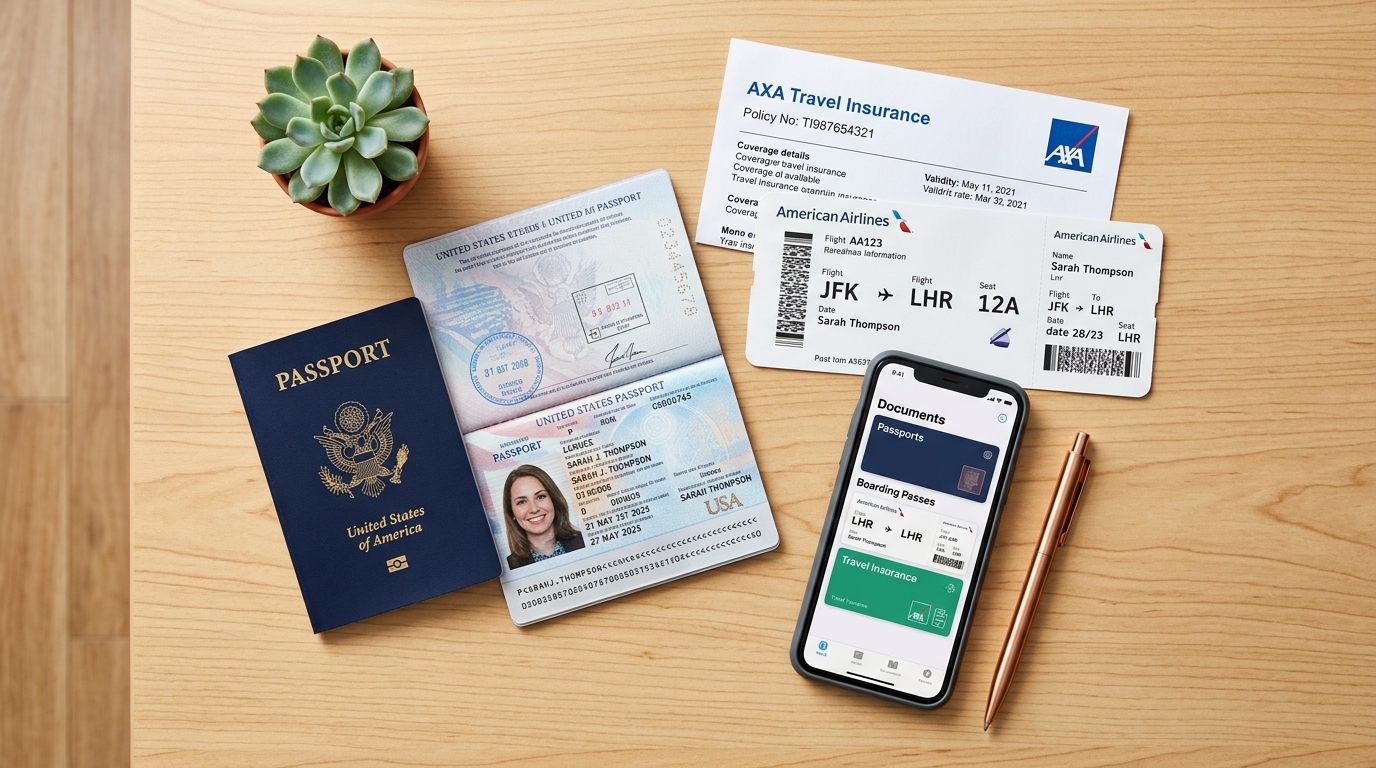
Every document you need — organized before you pack.
ETIAS, UK ETA, and the New Digital Gatekeepers
Starting late 2026, Americans will need pre-approval to visit 30 European countries — even for a short vacation. The European Travel Information and Authorisation System (ETIAS) joins the UK's ETA and the EU's new Entry/Exit System in a wave of digital border controls that didn't exist two years ago. None of these are visas. All of them are mandatory.
ETIAS (Europe — Q4 2026)
According to the European Commission, the fee was raised from the originally proposed €7 to €20 in July 2025, citing inflation and expanded system costs. You'll need it for all 30 Schengen zone countries — France, Germany, Italy, Spain, Greece, the Netherlands, and 24 more. The official ETIAS portal confirms most applications process in minutes, though some take up to 96 hours. Valid for three years or until your passport expires. Travelers under 18 and over 70 are exempt from the fee.
One important nuance: ETIAS is scheduled for Q4 2026, but full mandatory enforcement — where airlines are required to deny boarding without it — may not take effect until early 2027 after a transitional period. Apply as soon as the system opens regardless. The exact enforcement timeline will be confirmed by the European Commission at least six months before launch.
UK ETA (Already Required)
Since January 8, 2025, US citizens need an Electronic Travel Authorization to enter the UK — including if you're just connecting through Heathrow, Gatwick, or any other UK airport. Full carrier enforcement began February 25, 2026: airlines must verify your ETA before boarding. The fee is £16 (as of March 2026), and it's valid for two years.
EU Entry/Exit System (EES — April 2026)
This one doesn't cost anything, but it adds time at the border. According to the official EU EES portal, the biometric system becomes fully operational on April 10, 2026, registering your fingerprints and facial scan at entry and exit. First-time entry will take longer than you're used to. The system replaces passport stamps and automatically tracks your 90-day short-stay allowance.
Flying from New York to Paris with a Heathrow layover? You still need a UK ETA — even if you never leave the terminal. This catches American travelers off guard constantly. Apply before you book, not after.
Here's how the three new systems compare side by side — note that ETIAS and UK ETA require action before you travel, while EES happens automatically at the border.
| ETIAS (Europe) | UK ETA | EU EES | |
|---|---|---|---|
| Launch | Q4 2026 | Active (Jan 2025) | April 2026 |
| Fee | €20 (ages 18-70) | £16 | Free |
| Valid For | 3 years | 2 years | N/A (biometric) |
| Covers | 30 Schengen countries | United Kingdom | EU border crossings |
| Processing | Minutes to 96 hours | ~3 business days | At the border |
| How to Apply | Online (official EU portal) | Online (GOV.UK) | Automatic at border |
Bottom line: if you're traveling to Europe or the UK in 2026, you have online paperwork to do before you board. Not much — 10 minutes and a small fee — but miss it and you won't get on the plane.
The Complete Document Checklist
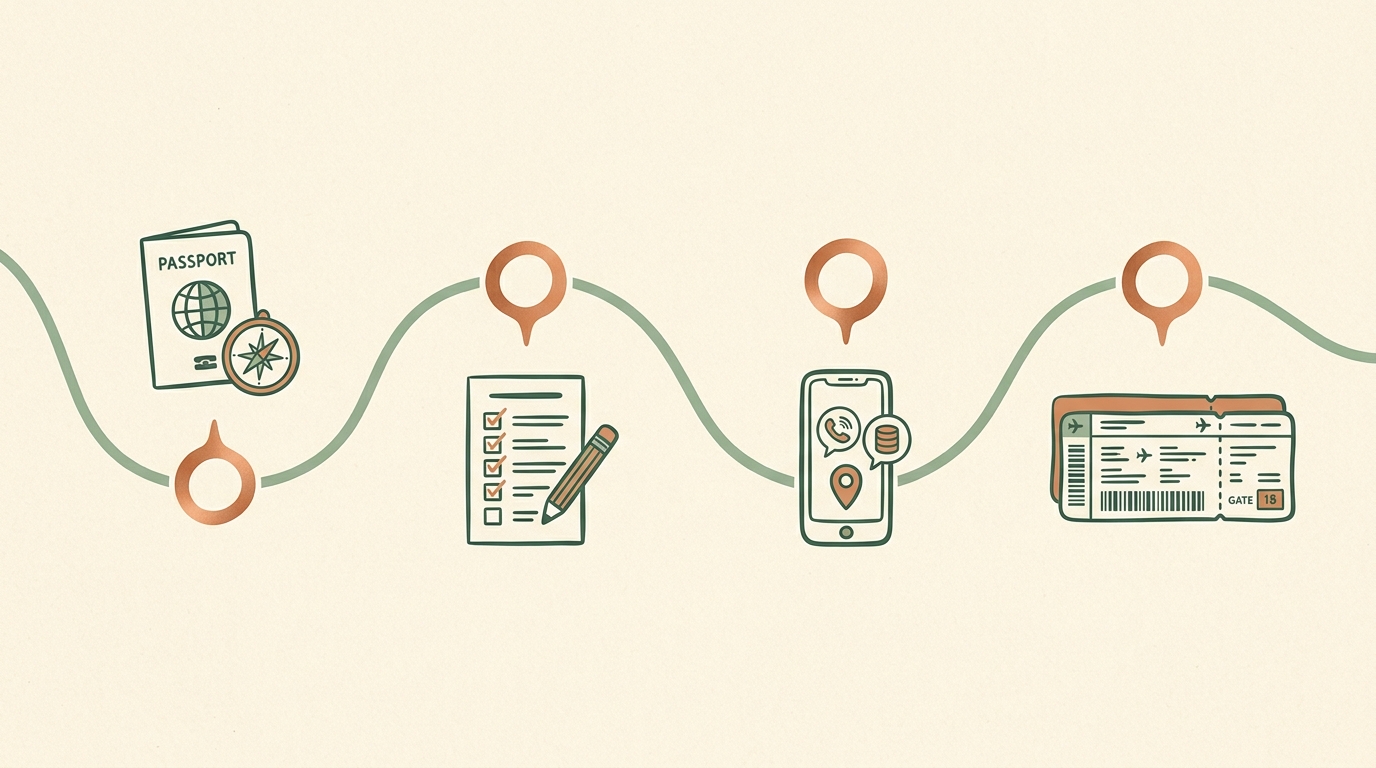
Work backwards from your departure date.
A friend of ours missed a connecting flight in London last year because she didn't know about the UK ETA. She'd traveled through Heathrow a dozen times — but that was before January 2025. The airline wouldn't let her board. Everything below is organized by when you need to do it, working backwards from departure, so the same thing doesn't happen to you.
6+ Months Before Travel
- Check passport expiry: does it have 6+ months validity from your return date? If not, start renewal now — budget 8-10 weeks door-to-door for routine processing
- Verify REAL ID: look for the star on your driver's license (for domestic flights)
- Check visa requirements: some countries outside the Schengen zone still require traditional visas
- Start the passport process if you need a new one ($165 for first-time adults, $130 for renewals)
If this is your first time traveling abroad, our guide to first international trip mistakes covers the pitfalls beyond paperwork — from currency blunders to roaming charges.
3 Months Before Travel
- Apply for ETIAS if traveling to Schengen countries (once launched, Q4 2026)
- Apply for UK ETA if traveling to or transiting through the UK — yes, even for layovers
- Purchase travel insurance — according to an Upgraded Points survey, 63% of American travelers skip this. A basic international policy covering medical emergencies and trip cancellation typically costs 4-8% of your trip price. Don't skip it
- Check destination-specific requirements: vaccination records, International Driving Permit, customs declaration forms
1 Week Before Travel
This is your final safety net. Everything from here on is about redundancy — making sure no single lost document can derail the trip.
- Print backup copies of: passport photo page, travel insurance policy, hotel confirmations, return flight itinerary
- Save digital copies to cloud storage AND offline on your phone
- Share documents with an emergency contact back home
- Verify authorization status: confirm your ETIAS/ETA shows "approved" — don't assume
- Photograph all documents (front and back), including credit cards for emergency numbers
Day of Departure
- Passport in carry-on — never in checked luggage
- REAL ID or passport for domestic flights
- Boarding passes: digital and printed backup
- Travel insurance card or policy number easily accessible
- Prescription medications with doctor's note (especially controlled substances)
- Emergency contact card with local embassy phone numbers for your destination
Digital Backup — Because Paper Gets Lost
A pickpocket in Barcelona. A spilled coffee on your boarding pass. A hotel safe that jams shut with your passport inside — it happened to a colleague in Lisbon, and the front desk couldn't open it until morning. Documents disappear. The fix is redundancy: copies in the cloud, copies offline, and copies with someone back home.
What to scan or photograph:
- Passport photo page
- Travel insurance policy (full details, not just the card)
- Flight confirmations and hotel bookings
- Visa or ETIAS/ETA approval screens
- Driver's license (front and back)
- Credit card emergency numbers
- Prescription labels for medications
Store copies in at least two places: a cloud service you can access from any device (Google Drive, iCloud, Dropbox) and a dedicated offline folder on your phone. Email copies to yourself as a third failsafe.
For group trips especially, having documents scattered across five different apps gets messy fast. Tools like TripProf let everyone store travel documents in one shared trip workspace — passports, bookings, insurance — accessible offline when you're standing at immigration without Wi-Fi.
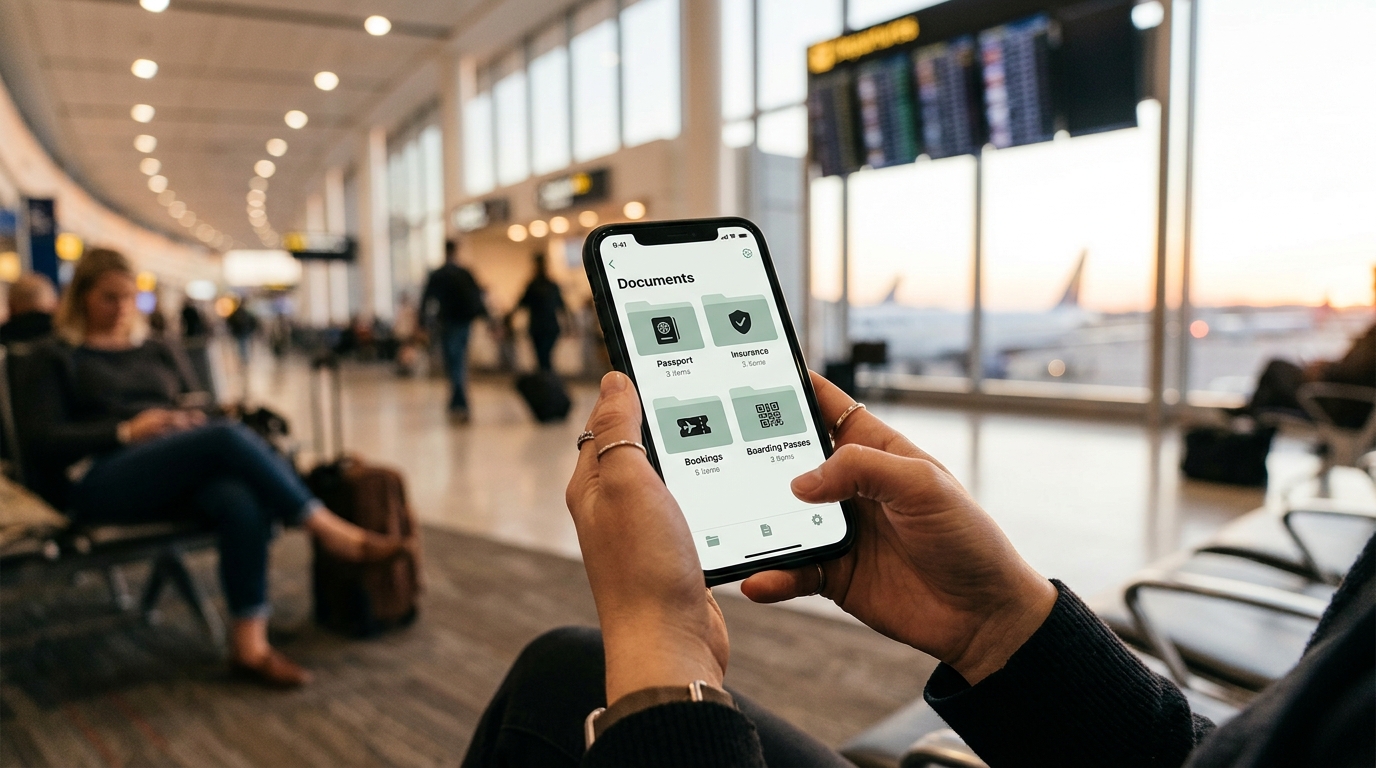
Cloud copies, offline copies, copies with someone back home.
Frequently Asked Questions
Do I need REAL ID for international flights?
No. International flights require a valid passport, not REAL ID. REAL ID only applies to domestic air travel within the United States and access to certain federal facilities.
What if my passport expires in 4 months — can I still travel to Europe?
Risky. Schengen countries require your passport to be valid for at least 3 months beyond your departure date. With 4 months left, you'd barely qualify for a short trip — and many airlines flag this at check-in. Renew before you book.
Do children need ETIAS?
Yes. Everyone traveling to the Schengen area needs ETIAS, including children. However, travelers under 18 and over 70 are exempt from the €20 fee — their applications are free.
Can I use my passport instead of REAL ID for domestic flights?
Yes. A valid US passport or passport card is accepted at every TSA checkpoint. Many frequent travelers use their passport as their go-to ID to sidestep REAL ID complications at the DMV.
What happens if I forget to apply for ETIAS before my flight?
Once fully enforced, you'll be denied boarding. Airlines will verify your authorization before departure. Most applications process in minutes, but some take up to 96 hours — don't leave it to the airport.
Do I need a UK ETA just for connecting through Heathrow?
Yes. Any US citizen passing through a UK airport needs an approved ETA — even without leaving the terminal. This has been fully enforced since February 25, 2026.
Is travel insurance actually necessary if I have health insurance?
Almost certainly. Most US health plans provide zero coverage abroad. According to Squaremouth, a medical evacuation can cost $25,000 to over $250,000 depending on distance and severity. A basic international travel insurance policy is far cheaper than one emergency flight home.
Sources
- ABC News — REAL ID enforcement and DHS compliance estimates
- NBC Washington — TSA $45 ConfirmID fee and post-enforcement compliance data
- NPR — REAL ID generational compliance rates and alternatives
- European Commission — ETIAS €20 fee announcement
- Official ETIAS Portal — ETIAS application details and processing times
- Official EU EES Portal — Entry/Exit System launch date and biometric requirements
- GOV.UK — UK Electronic Travel Authorization requirements
- U.S. State Department — Passport processing times
- U.S. State Department — Passport fees (book, card, expedited)
- U.S. State Department — Schengen Area passport validity requirements
- World Population Review — Countries requiring 6-month passport validity
- Upgraded Points — 2025 travel insurance survey
- Squaremouth — Medical evacuation cost data
Key Takeaways
- Check your driver's license for the REAL ID star today. If it's missing, use your passport for domestic flights or apply for REAL ID at your state DMV
- Renew your passport at 9 months remaining validity. The 6-month rule affects 70+ countries, and processing takes 8-10 weeks door-to-door
- Apply for ETIAS as soon as it launches (Q4 2026) if you're planning any trip to mainland Europe — it's €20 and valid for 3 years
- Get a UK ETA before any trip to or through the UK. This is already enforced, not a future requirement. Even Heathrow layovers count
- Budget $130-$190 and 8-10 weeks for passport renewal. Apply October-December to avoid the spring rush
- Buy travel insurance for international trips. Your domestic health plan almost certainly won't cover you abroad, and a medical evacuation alone can exceed $100,000
- Keep digital copies of every document in at least two places — cloud storage and offline on your phone. Tools like TripProf keep everything organized in one shared workspace, accessible even offline
- Set calendar reminders for passport expiry, ETIAS renewal, and any upcoming document deadlines
Documents aren't the exciting part of trip planning. But they're the part that can stop a trip before it starts. Thirty minutes of prep now means zero panic at the airport later.
Last updated: March 21, 2026
Keep Reading
More travel tips and guides picked for you

Solo Travel Burnout: When the Adventure Stops Being Fun
You saved for months and told everyone about this trip. Now you can't get out of bed. Solo travel burnout is real — here's how to spot it, tell it apart from a bad day, and fix it.

Your Flight Got Cancelled: How to Get Your Money Back
Your airline cancelled your flight and offered a voucher. You're owed cash — and if you're flying in Europe, up to €600 on top. Here's the step-by-step playbook for US and EU passengers.
Your Airport Survival Guide During the TSA Crisis (2026)
TSA lines are hitting 3+ hours at major airports. Here are the specific tools, tactics, and workarounds to get through security without missing your flight — including free shortcuts most travelers don't know about.